It is early March here in mid-Wales and spring is trying to bring a burst of new life to town. There are daffodils on every grass verge and new lambs are starting to populate the local fields, despite the lingering winter chill. It isn’t warm but it is warmer than it was, which means that at least the grass and car have been devoid of hard frost most mornings. The breeze, if it appears, will cut through you to your kidneys, and the trees are yet to regain their foliage, although it shouldn’t be long coming. In short, there is new hope, everywhere you look.
The trout season on the rivers opened up a week ago and my only foray within season to date, resulted in little more than a damp sock and a cold foot; the waders are going to require some investigation as to the problem, which is minor, but annoying all the same.
Daffodils (and lambs) the true harbingers of spring.
So today, as a pre-amble to the Wales-France Six Nations Rugby I decided to put in a couple of hours on the Newbridge Water. It is close enough that if things turn horrible outside I can easily pack it in and be home in front of the fire in not more than minutes.
The Wye, which has been raging and discoloured for the most part has dropped down and cleared nicely, even the tannin staining which seems to put the fish off a bit has mostly dissipated. It would have been nice if the sun had decided to join the party, but at least the rain held off and the waterproofs were left back in the Jimny.
The valley is now filled with the sounds of bleating sheep and lambs, it seems that the noise level is greatly increased when there are newborns about, mothers trying to locate babies and the children doing much the same. Such that there is a cacophony of bleats on all sides.
Lambs everywhere
One cannot help but smile at the lambs though, they are cute as buttons, with that big baby eye thing going on, which simply makes all baby animals and in particular mammals, seem so much more attractive than their adult counterparts.
Boringly, apparently it has to do with the fact that baby animals are born with pretty much full sized eyes, whilst the rest of their bodies have some catching up to do. It would seem, that because the cornea has no blood supply and can, therefore, grow no more, the eyes have to be pretty much fully formed at birth.
This “big eyed” face picture, used much in cartoon characters, eye lined and mascaraed ladies and prevalent in babies causes some level of over-stimulation to our brains, making us feel the need to love and nurture. I am not quite so sure that all of that was affecting me as I tackled up next to the sheep fields, but certainly I wouldn’t have found it easy to look at a lamb chop squarely in the face, having watched this neonates gamboling with one another around the pasture.
However, musings about lambs and eyes needed to be put to the back of my, obviously overly active, mind, there was fishing to be done.
It was only my second trip out since the start of the season, it was still pretty darned cold and the river, although lower than previous days, wasn’t exactly stagnant. I had tied up some 4mm tear drop bead nymphs in preparation should they be needed, although, as things turned they weren’t required. I didn’t require much heavier than 3mm tungsten. I would have preferred to have been casting dries, although that can’t really be expected to produce result this early in the season and I was keen to get my score card ticking. So opted for a Euro-nymph outfit, whilst hedging my bets and keeping a double taper line and long leader in the back of my vest, just in case.
As things turned out, I did see a few small mayflies come off the water and a single, small and splashy rise.
I probed the currents with the nymph rig and produced nothing but the odd twig fishing through the first run. I hadn’t planned on being out long or trying too hard, but was keen to at least find a fish.
In the next run and having changed flies, weights more than patterns really, to better suit the conditions at hand, I had a very subtle take and landed my first brown trout of the season. An inconsequential fish, but for the fact that it was the first trout of my first full season here in Wales.
My first trout of my first full season here in Wales.
Not a few casts later I hooked into a moderate grayling, again unremarkable, but for being the first one of those for the season too.
My First Grayling, not large, but not unimportant.
I plodded on, my damp and chilly right foot, putting me off a bit, but I figured I would carry on for another thirty minutes or so before calling it a day. Then another subtle take, which I initially took to be yet another hook up on one of the many sunken twigs than have been blown into the water over the winter months.
But happily the twig pulled back, and in fact did so with some gusto, resulting eventually in a better than average grayling in the net.
A more solid example of Thymallus thymallus, and the last of the session.
I haven’t done enough of this cold water fishing to know for sure, but I suspect that the light takes are a result of the cold water and the relatively slow metabolism of the fish. What I can say, is that if you are playing this game, it would appear important to strike at the slightest hesitation of the sighter, even if most of the time that results in a twig or a hook up on the bottom.
I fished on a bit more, without any further success and decided it was time to be back home, in front of the fire and the Six Nations Rugby. Unfortunately, Wales did less well than I had, and suffered another loss, but they are a new and inexperienced side and did show some amazing flare in both attack and defence. Hopefully their time will come soon. For now I am happy to have put three fish in the net, survived the cold and got my 2024-5 trout season underway with a win. Not a big win, and not particularly significant fish, but the first is always significant at some level no matter the size.
This past December was one of the wettest on record, we had water leaking through the mortar of the chimney breast and spreading chill damp patches on the walls of the loft space. The Wye had been in full flood, breaching its banks in a few spots only days ago. But after three or four dry days the waters had dropped significantly and cleared to the point that the gravel on the bottom was clearly visible. Thoughts started to turn towards perhaps trying fishing.
I had a brand new Vision Nymphmaniac rod sitting unused in the corner of the conservatory and was hankering to give it a swing. The only trouble was that the temperatures dropped as fast as had the river, and the morning, although dawning clear, showed frost on all the trees and layers of ice on the poor and chilly Jimny sitting outside the cottage. Actually even thinking of going fishing seemed to be some form of madness.
Should I head out? The lounge was distinctly cosy, the embers of last night’s smelter grade wood fire still throwing out heat into the room and simply checking the thermometer on the outside windowsill was enough to have me scurrying back inside. It was below zero, the neighbour’s waterfilled bucket was frozen solid and despite the temptations I was struggling to motivate myself to head out and stand in a freezing river. Not least because I have never really attempted any proper winter grayling fishing, so didn’t have too much of a clue as to what to expect.
It didn’t help much that the day’s “high” according to the weather forecast was 2 degrees, and what little sun that had been showing through the high clouds was waning as I pontificated.
In the end I gathered up pretty much all the warm clothing I could find: fleece lined thermal leggings, Helly Hansen thermal shirt, polo neck, Cotton Traders fleece, fleece lined jacket and of course the all important Beenie to cover my head and ears. I felt rather like “The Michelin Man”, and with all this clobber on decided to carry relatively little in my fishing vest. A couple of boxes of flies, some spare tippet and my faithful lanyard holding various essential tools, nippers and the like. After excessive eating and drinking over the festive season I was already likely a tad more corpulent than I would prefer, and with all this clothing on I did wonder if I would be able to squeeze behind the steering wheel of the Suzuki.
All dressed up against the chill, and ready to go.
By this point I was pretty much backed into a corner, but figured that I might easily quit if the going got too tough, it isn’t a long drive to the river.
At least by the time I headed out the ice had cleared from the Jimny’s windscreen, and I didn’t have to start the excursion with frozen fingers as a result of scraping ice.
At the river I tackled up by the car, and was quietly convincing myself that it wasn’t really that cold, I did manage to tie up the required knots without losing all feeling in my fingers and a brisk march across the slightly crunchy fields warmed me up a tad.
Then the wind started to pick up, at first just a light breeze, but enough to make control of the flies tricky and putting an upstream bow in the sighter which would make detecting takes, should I get any, rather problematic. But I had decided that I was going to give it a go and stuck to my guns.
I tried several spots where I could gain reasonable and safe access to the water, I certainly didn’t want to take a swim, so stuck with areas I had fished previously and where I was unlikely to encounter anunexpected drop off.
That bitter Easterly wind picked up over the course of time and even adding more weight to the flies wasn’t really enough to gain back control. I had been at it for two hours now and was more comfortable that I had imagined I would be. But then the line went tight and I hooked into a nice fish. It turned out to be an out of season wild brownie, in remarkably good nick give the recent conditions on the river, but I was well pleased to have enjoyed some modicum of success.
Success, an out of season Brownie, but that didn’t matter too much. It was nice to have a fish on the line.
Plans to film its release with the GoPro were put on hold, because the camera, which had been fully charged on my departure, was now refusing to even start up. It seems that this is something of a problem with them, and they don’t like to be out in sub zero temperatures. So fiddling through layers and layers of clothing I managed to extricate my phone to take a quick snap and release the brownie back into the freezing river.
With that of course I got my hands wet and that bitter breeze decided that now was the time to turn the screws and within seconds my extremities went from comfortable to numb, rapidly progressing to severe pain. It was time to head back to the car. Getting my hands into my pockets and out of the breeze improved things immensely and by the time I had returned to my vehicle feeling was returning and I was able to dismantle the tackle without too much trouble, only to realise that my cap was missing. So I headed back the way I had come, over the slightly thawed and muddy fields, relocated my missing headgear and found that I had warmed up to the point of relative comfort once more. I could have been tempted to give things another go had I not already dismantled the rod. Probably just as well, one really should know to quit when one is ahead.
I hadn’t expected to catch much on my first true winter foray and was more than pleased that I didn’t blank. The cell phone image of a pretty brownie sufficient proof of the pudding and enough, no doubt, to motivate me to try again next time the weather is clear and dry.
I think though, that I might take more cognisance of the wind next time, and if all goes well, I may find a still day, preferably with hints of weak winter sunshine. But I have my wardrobe pretty much sorted and know now more of what to expect during these extreme conditions. No doubt there are many anglers who endure far worse, but you need to bear in mind that most of my fishing over the past three decades has required little more than a T shirt, shorts and some sunblock, fishing in sub zero conditions comes as something of a shock to the system
It has been wet and windy here in Mid-Wales, although we have avoided most of the “Yellow Weather Warnings” which seem to bypass us to the North, West or East. I have taken some time away from my cottage restorations, and did hope that I might try my hand at some winter grayling fishing. Trouble is that the Wye refuses to drop or clear much and each time that there looks to be something of a gap the heavens open once again and the river floods.
The flows of water over the Caban Coch dam wall in the spectacular Elan Valley are quite a sight to behold, and ,at least so far, the river Wye is yet to break its banks and take out half of the Builth Wells car park, but of course there is still plenty of time for that to happen.
With fishing not really on the cards, and having exhausted myself with several longish country walks it seemed that it might be a good time settle down and tie some flies in preparation for a foray to the river at some point, or for that matter just stock up on dry flies for what I hope will prove to be a productive summer; which I keep trying to convince myself isn’t too far away.
But and it is a BIG “BUT”, I can’t really say that I am in desperate need of more flies. Although Covid lock down back in SA a few years ago seems a distant (and happily so) memory, I spent so much time on the patio tying flies to ease the boredom that I really haven’t need for more, at least not a lot more.
Visions of cosy evenings in front of the fire in my cottage here in Wales, tying up patterns in anticipation of a season to come haven’t quite worked out the way that I had hoped. For one thing I am way out of practice, having barely needed to wrap a hook for a year or so. I think that my fly boxes are suffering from “long COVID”. All the efforts put in years back have meant that I have more flies that I really need, even the requirement to do more Euro-Nymphing than would have been the case in Cape Town hasn’t meant that I need more flies and there is little room left in my already overly large fly box collection.
So what to do? Order more fly boxes, there can be few things that bring on both anticipation and trepidation in equal measure, as a brand new fly box, and now I have three more. Simply looking at the barren expanse of neatly slotted green silicone tempts one to start filling it up with various patterns, but can I say that I need any? Probably not. I pretend that perhaps I can create a few loan boxes should I have friends visit who are keen to fish, or maybe that I should build up a stock from which I can pilfer flies as and when I need them, come the opening of the trout season. The trouble is that I know that in my heart of hearts I am not going to be able to resist the temptation to take them all along on the river with me. You never know when you might just need that one that you left in the office.
It is getting a little daft to be honest, over most of the season last year, my first based here in Wales, I doubt that I used more than a dozen different flies:
I did well with small midges, and tiny Klinks with CDC collars accounted for most of the rising fish that I targeted on warm summer evenings. Tungsten beaded perdigons and hare’s ears accounted for most of the trout and grayling taken when nymphing and in all honesty I can’t see that I will need much more than those to cover the bases. And yet I feel compelled to keep tying, build up stock, entertain myself.
Perhaps it would be a better use of my time to cut up some of the old patterns and reuse the hooks and beads, but that is a chore, it isn’t fun, and it isn’t entertaining, so I just keep on going, churning out more flies. The only real positive is that new flies always fill one with some level of excitement and expectation, such that one starts to look forward to the new season. I can already imagine the latest batch of patterns being quietly intercepted on long drifts by some, currently entirely imaginary, large fish.
As I tie flies, I imagine that I will soon be out on a summer evening, drifting new patterns over feeding fish.
There is something to the pre-season preparations undergone by all anglers, no matter that they cast flies or fling baits. That preparation is what whets the appetite, gears up the imagination and starts to raise excitement levels. It might actually be an essential step; so tying unneeded flies and filling unnecessary fly boxes could, I suppose, be viewed as a level of self-medication. A one man pre-season meditation of things piscatorial. Whatever it is, the temptations are difficult to resist and my fly collection is growing. And then, with all of that, I am sure that the day will come where I have been successful with one or another pattern, lost the last one in a tree branch and start to panic that I “don’t have the right fly”.. It is a ridiculous illusion, a total fantasy, but my ancient Boy Scout Mantra about “being prepared” drives me on. Perhaps you really can not be too slim, too rich or have too many flies?
With little opportunity to fish I am obsessing about flies again, forgive me:
If you have ever looked at the face of the “The Man in the Moon”, seen roaming camels in the clouds or been blacklisted for your sexually explicit explanation of an ink blot test then you understand the concept of pareidolia.
Pareidolia, “is the tendency for perception to impose a meaningful interpretation on a nebulous stimulus, usually visual, so that one sees an object, pattern, or meaning where there is none.”
Somehow or other, we have this innate, built in program that prefers to see order in disorder, to effectively see things which are not really there.
This is simply a Danish electrical wall socket, but most of us will see a smiley face. Perhaps just because fly fisherman are a happy lot?
Of course, one cannot be sure that these aberrations apply to other creatures, but it doesn’t seem outside the bounds of possibility that it does, and in this instance, that it applies to fish. Could it not be an explanation for their consumption of less than perfect artificial flies that they simply see what they want or expect to see?
After all, many if not most of the popular flies used by anglers across the globe are generalist at best. Near universally accepted as productive patterns, The Comparadun, Humpy, Adams and Hare’s Ear or perhaps even more remarkably the Royal Coachman? Why on earth should the Royal Coachman, or Royal Wulff be listed constantly amongst the “top ten dry flies” or similar lists? When they bear not even passing resemblance (in our eyes) to anything living, and some might suggest should be allowed to live for that matter? (My personal belief is that the Royal Coachman quite likely and accidentally imitates the segmented body of an ant well enough to be mistaken as such)
So, much as I might be offended, were anyone to suggest that my lovingly fashioned artificial flies were “nebulous stimuli” the chances are that that is EXACTLY what they are, more to the point, I figure that the more nebulous the more likely that the fish might see in them what it is expecting to see.
Fly anglers and fly tyers have been obsessed for years with the concept of exact or close copy of the insects they seek to represent. It has been an obsession and one that has been both widely and to my mind foolishly accepted for decades. And yet, the most cursory glance at real insects and their supposed imitations must surely reveal that a close copy is pretty much an unobtainable standard, and exact copy absolutely impossible to achieve.
I find that over time, my flies have become more “nebulous”, to my mind allowing the fish to see what it wants to see.
I have been recently re-reading “Sunshine and the Dry Fly” by J.W Dunne, it is a tome viewed as near prophetic in fly fishing circles. Given the date of publication, 1924, and the limited materials available one cannot but admire the efforts this man put in to understanding dry fly imitations. He would frequently give up his fishing to capture specimens and rush them back to his home for closer study. (He obviously had a lot more time to devote to fishing than most of us do)
Take for example his obsession with the colour of the artificials. Sunshine and the Dry Fly, Chapter III, The Blue Winged Olive: “I obtained from the manufacturer of artificial silks, what is known as a “shade card,” containing one hundred and thirty-six different shades of material. But even with all these to choose from, it was obvious from the first that I should be obliged to blend.
Some original Dunne Dry Flies, things of beauty, but the obsession with colour?
What that meant to Dunne, was to separate fibres from different swatches and mix them up to provide an”exact recipe” which could then be copied by others. Obsessed, but at least not selfish. For example: Dark Mayfly (female) Hook 7, Body 5(298A) +2(226) +2 (218), Tying silk M.2. .. etc. The body refers to a mix of five strands from swatch 298A, two from swatch 226 and two more from swatch (218)..
Surely, if such close imitation of the colour, never mind structure, legs, wings, body shape and all the rest, were remotely necessary none of us would ever catch a single fish. Modern fly tying has only partially escaped this notion, the absolute obsession with close copy artificials, and I confess, that as I read through the book, doubts as to whether I had the right colours in my fly box started to percolate to the fore, raising doubt in my mind. It has been such a long held belief that it really is difficult to shake off. And Dunne’s writing, is so assured, so compelling, that it is easy to get caught up in his zeal.
But could the concept of pareidolia perhaps provide more useful insight as to what we might aim to achieve in terms of our artificial patterns? Could it be that flies designed to be “all things to all fish” may prove in general more effective? My thoughts are definitely leaning in that direction. That perhaps the fish sees a loose bundle of fine fibres and “sees” legs and wings, the struggle to emerge, effectively convincing itself of the pattern’s authenticity?
Perhaps it is better to provide an illusion and allow the fish to “see” what it wants?
Firstly, there is much evidence that general patterns, are effective much of the time for many anglers in many different locations, even for various species of fish for that matter. To my mind, it is entirely possible that the closer you might get to the imitation of one insect the further you get from its potential imitation of another. Such that generalist patterns might cover far more bases and be in general more effective.
In his excellent book “The Pursuit of Stillwater Trout”, Brian Clarke discusses mostly subsurface patterns in moderate detail. It is a book which revolutionised my personal stillwater fishing some 50 years back, and many of the thoughts within it have stuck with me. However, one of the sections on flies, having given quite detailed instruction on entomology and fly design lists “hedged bet patterns”.
These are traditional wet flies, such as the Mallard and Claret or the Invicta. Flies, which to our eyes represent little in terms of real fly life. However, and no matter that they were designed in an era where many flies were merely expressions of fancy, no doubt manufactured using what materials happened to be lying about, they have stood the test of time. Many UK Stillwater anglers would feel naked venturing out on a summer evening without an Invicta in their box.
The Invicta, remains an excellent imitation of subsurface ecloding caddis/sedge flies.
It turns out that the Invicta; accidentally perhaps, makes a spectacularly good imitation of ecloding pale sedge (caddis) pupae. This occurs underwater as the adult bursts free from its pupal shuck, a mini underwater explosion of wing buds, legs and abdomen, and the Invicta seems to mimic this exceptionally well. Perhaps therein lies part of the answer, you don’t need to copy something but rather mimic and possibly exaggerate certain features.
Part of the problem for anglers, even those as dedicated as Dunne, is that we don’t really know what trout react to and almost all study revolves around subjective rather than objective assessment. Did the fish take now because you changed flies? Or perhaps it was just a better drift, or the fish didn’t notice the fly the first time or your tippet sank on the last drift? It is extremely difficult if not impossible to assess all the variables and equally all too easy to give way to “Confirmation bias”.
Confirmation bias is: “people’s tendency to process information by looking for, or interpreting, information that is consistent with their existing beliefs.”
So Dunne, happily professes that “The fish was not gut (tippet) shy, but rather colour shy”. I suppose if you are writing a book all about the complexities of fly dressing, it is entirely probable that you are biased against any suggestion that close copy is the wrong approach.
For that matter, in writing this, how much am I influenced by my own beliefs and seeking confirmation that my thoughts are indeed correct. Perhaps they are not?
Equally could it not be that the trout suffers the same affliction, expecting to see food, imagining, legs and wings where there are none, and seeing what it expects to see? Does the fish intentionally or otherwise, merely confirm its own belief that the artificial is indeed edible and react accordingly? Does it see “The Man in the Moon” where he doesn’t exist?
The closest I have managed to get to some sort of “scientifically sound experimentation” has been to fish two flies at the same time, on the same tippet and cast by the same angler at the same fish. One would suppose that given the clarity of the water, both flies are visible to the fish and would notionally have much the same drift characteristics.
Fishing like this with a small parachute dry fly on the dropper and an insubstantial and roughly tied CDC soft hackle on the point I have taken fish after fish, all on the soft hackle. On one notable outing some 64 fish came to the net and only 3 took the dry fly. Now it may well be that the fish prefer to pick off insects in or on the film, rather than high floating artificials, but the soft hackle (again to our eyes) really seems a very poor imitation compared to the lovingly fashions dry on the top dropper. That not withstanding the fish regularly choose the former and eschewed the latter.
This singularly abused and insubstantial midge pattern was still taking fish, when they were apparently ignoring the unbattered parachute dry, fished on the same leader.
This has happened over and over again to the point of near monotony, the less “imitative” and rather bedraggled pattern has won over the fish.
Bob Wyatt’s book “What Trout Want” agrees, the idea of close copy, the need for numerous patterns to cover every eventuality and the concept of “the educated trout” are at best overstated, in almost all angling literature. As an aside, I do need to comment, that in reading Dunne’s Sunshine and the Dry Fly, his propensity for banging every fish of size on the head, begs the question, how they might ever get the opportunity to become educated in the first place.
I have recently completed filling a new fly box (is there anything that might fill the fly tyer with such expectation and at the same time trepidation?). None of the patterns within boast a single hackle fibre, most rely on CDC, either in split thread or dubbing form to provide both floatation and the illusion of life. Some of those patterns are illustrated above.
I have used similar patterns with great success in the past, but this is the first time I have dedicated a box to them. In the coming season perhaps, we shall see if I am on the right track or if confirmation bias is clouding my judgment and I am seeing things that are not there.
Buy Me a Coffee? The button below allows readers without any obligation to support my work by “buying me a cup of coffee”, I won’t stop writing if you don’t, but it is nice to be appreciated and most blog posts take up about four hours of my time to produce. So if you enjoyed this or found this and other posts informative and of value perhaps consider showing your appreciation
I have recently been re-reading an on-line article by my good friend Paul Kenyon on “Why does a trout take your fly?”. Paul is a dyed in the wool academic and as such the article is immaculately researched and indexed. A PhD thesis on the subject of why, and how trout take flies. For many it may appear overly long and perhaps even tedious, but the information and thought provoking insight into the views of people ranging from fly fishing Hall of Famer’s to animal behaviourists make for compelling reading.
There is so much in there that it is going to take me, and no doubt you, more than a few attempts to wade through and assimilate it all, if that is possible. But, as any good discussion does, it has motivated me to revisit some thoughts on fly design, and presentation.
So let me tell you from the outset that I am, what most people would refer to, as a presentationist, (it turns out that presentationist, is Latin for lazy fly tyer… only joking). That is to say that for me presentation is always the most important aspect of deceiving a trout, and I would advise anyone to improve their casting and presentation before they spent hours honing their fly tying skills.
For me, catching trout is ALWAYS about presentation and SOMETIMES about the fly too. I am someone who would rather fish with the right gear, correct leader set up, and the wrong fly than the other way around.
Sure, flies matter, but they probably don’t matter in the way that many of us have been taught they do, and they often don’t matter much.
We all know, that for all of the “innovation” put into flies like: Marinaro’s Thorax Dun, Goddard and Clarke’s USD Paradun, Mike Lawson’s No Hackle Dun, and no matter how technically perfect the tying or the thinking, they are not popular.
I well remember the advent of Goddard and Clarke’s book “The Trout and the Fly” and the introduction of the USD Paradun. Fly shops were filled with these patterns, it was the veritable talk of the town, and yet within a year or two you would be hard pressed to find one. On the other hand, the Gold Ribbed Hare’s Ear (GRHE) has stood the test of time, in both wet fly and dry fly versions. It has never gone out of fashion, and for that matter neither have numerous other generic flies such as the Elk Hair Caddis, The Adams, The Parachute Adams, The Pheasant Tail Nymph and more.
A fascinating book, but perhaps the concept of hiding the hook, although that appears sensible, might not be the revelation that we all thought?
I suspect that the USD paradun and the No Hackle are not bad flies; they are just a bitch to tie, and possess the durability of a moth in a flame. They may be great flies but it would seem that the angling public, (and most probably the trout too) don’t believe them to be worth the effort.
Don’t get me wrong here, I LOVE that people will think of this stuff, this is where innovation and improvement are born, and if you are trying to come up with something new then you are unlikely to always get it right.
Goddard and Clarke’s assumption, to a large degree, was based on the idea that the hook sticking out of the arse of the fly was a dead giveaway as to its lack of authenticity, and that by getting it up and out of the water one would achieve a previously unheard-of level of success. It is a compelling theory but for one flaw, every single fly caught trout, since the dawn of time, has ignored the hook, or at least allowed other features of the fly to outweigh its prominence.
As a young angler I was totally caught up in this, it seems so obvious that the flaw in design is the hook, that Halford’s concept (to my mind now a foolish one at best), that one needed a “close imitation of the real insect” would be best served by getting the hook out of the way. Goddard and Clarke had found the most miraculous way to do that, surely this was the most significant of improvements in fly design?
Except that it obviously wasn’t, if it were really that much of a breakthrough, then no matter the complexity or fragility, surely the angling public would have embraced it, but they didn’t, at least not for long. Still today most (and I could statistically argue ALL) fly caught trout ignore the hook, no matter how much it seems to us obvious that hiding the hook would be a game changer, it turns out that, for the fish it isn’t.
I believe the answer lies in the way that fish, and probably all of us living creatures for that matter, process information. What Paul, in his writings refers to as “heuristics”, rule of thumb calculations which supersede other considerations.
If the fly looks close enough to something edible the fish is likely going to eat it, if that same fish is already busy eating something and your fly ticks a few boxes of recognition the fish is likely going to eat it. If it is presented right in front of the fish’s nose, it is likely going to eat it.
What I am talking about here is that some negative aspects of fly design, are going to be ignored if overwhelmed by positive aspects of fly design or presentation. In other words, the trout doesn’t fail to see the hook, it simply allows other positive aspects to overwhelm the inconsistency of the hook sticking out of the fly body. So, to my mind flies that overwhelm, for want of a better term “doubt” are likely to be the most productive. In this regard it seems that some features are more important than others.
So that might all sound a little academic, apocryphal, daft even, but consider this. Some of the most powerful brands in the world, who employ numerous consultants, psychologists, marketeers, researchers of every kind have realised that YOU are easily duped, and one might hope that you are smarter than the average trout.
Simply a sign? Or a super stimulus?
Why do you imagine McDonald’s restaurants have giant “Golden Arches” overlooking them? Do you use them to locate the restaurant? Or, do you see the sign and start to feel hungry? Surely part of the purpose of the “Golden Arches” is to make you feel hungry at that moment. I am pretty sure that Colonel Saunders and his minions didn’t do this just to provide a better location finder. I am not knocking Mc Donald’s, I am simply using them as an example of all manner of marketing manipulations which are well understood.
See the Golden Arches and feel hungry.. a near knee jerk, subconscious motivation, to the point that one is unaware of it. I might add rather disingenuously that if you looked at the average McDonalds customer, the one thing that they probably are not is starving. So, you can stimulate them to feel hungry, even if they are not, with little more than a recognisable image.
What I am suggesting to you is that, at least to some degree, you can do the same to trout with a clearly recognised sign which stimulates a response. It may well be that in a heavy hatch situation you can actually increase the statistical likelihood of a fish actually selecting your artificial from amongst hundreds of the real thing, or making an error of judgement based on kneed jerk reaction.
I strongly suspect that most of the long-standing fly patterns which you find in EVERY angler’s boxes contain one or more of these super stimuli. I am not sure that any of us can be sure what they are but I am pretty convinced that they are there.
All firm favourites the World over, but not really a truly imitative fly amongst them.(at least not to our eyes)
For the most part none of the most popular flies are, at least to our eyes, particularly great imitations of any known insect. But they contain enough information, perhaps even exaggerated triggers, to convince a fish not only to eat them, but equally to ignore some glaringly obvious mismatches to what have been referred to as “Prey Images”. (Probably in much the same way as the average McDonald’s burger doesn’t really represent the picture on the menu).
I like to think of imitation flies as caricatures.
Instantly recognisable images but containing only super exaggerated triggers and not representative of the “real thing” at all.
Everyone of us can identify the characters pictured, and yet, not a single image represents in any real way the identity of the subject. Key features have been emphasised, often to ludicrous degree and instant recognition results.
Why should trout be different? Emphasising key characteristics seems a very likely means of triggering a response from a fish. The problem is that we don’t know what those characteristics are, and they may well vary depending on the situation at hand.
I recall, years back fishing on a Catch and Release stream, where a drag free drift of a dry fly was essential for success. I could honestly claim not to have seen a fish consume a dragging artificial in twenty years of angling. But then one day, there was a hatch of some kind of moth, not aquatic, but emanating from the grasslands. These things fluttered and splashed and waked all over the river and it didn’t take long for the fish to key into them. Trouble was, with even a fair facsimile the fish remained disinterested, but just about any fly of similar size, dragged across the surface resulted in aggressive and spectacular takes.
As I say, catching fish on this stream with a dragging fly was virtually unheard of, but on this occasion, and I have only ever seen it once, the key trigger was the movement of the fly. It didn’t much matter the imitation used.
Or fish an ant fall; you can fish any fly you like so long as it is black and has at least two segments, near nothing else works. The fish seem to be totally preoccupied with the segmentation, there don’t even have to be the correct number of them, two or more will do. (ants generally exhibit three segments but quite clearly but the trout don’t seem to bother to count).
So perhaps we would do well to spend a little more thought on what key triggers are in play before selecting a fly, designing one, or presenting it to the fish. What seems important to you may well not be important to the fish.
A few things that I think may at various times be crucial:
Illusion of life: for me that means soft materials, soft hackles, not necessarily drag or significant movement. Hare’s ear dubbing, CDC fibres and such. The classic stiff hackle fibres of traditional dry flies don’t imitate this anywhere near as well as CDC or even some synthetic materials. I well recall fishing to large yellowfish in a stream brought to its knees by drought. The fish in the system effectively trapped in near still pools. Nymphs with CDC collars were universally effective, anything else, even a Hare’s ear didn’t work. I suspect with so little water movement, the slight movement of the hackle collar were enough to distinguish, in the fish’s eyes at least, the difference between food and non-food.
Soft mobile materials are likely to provide a better illusion of life compared to stiffer ones.
Segmentation: Where ants are concerned, I am more than convinced that the overriding trigger is segmentation. As said the number of segments seems unimportant, but they must be there if that is what the fish are looking for. I can’t say that I believe, normal ribbing of a nymph or dry fly abdomen is significant enough for the fish to care, and frequently don’t bother with it on my flies, but I could be wrong.
For ant patterns I am convinced that segmentation is a super stimulus trigger.
Movement: For me this is a rarity, but where one has caddis flies which run on the surface, or as above moths trying to escape the clutches of a watery grave, movement might be an overriding super stimulus. The “induced take”, a well-accepted tactic, is further proof that at times movement might result in stimulation of an automated response on the part of the fish.
Vulnerability: I have been, and remain, convinced that the most effective fly patterns much of the time imitate various levels of vulnerability. Shuck stuck, drowned, film trapped, emerging, etc etc, Flies that appear damaged and unable to escape. I have certainly watched a hatch where it very much seemed the trout predominantly targeted duns blown over by the breeze and with one wing stuck in the film. We could watch them drift down river and with a good degree of accuracy predict which ones were going to be picked off. A level of imperfection would appear to be a great advantage in an artificial fly and perhaps most anglers will admit that their flies are more effective when a trifle chewed up. Artificial lure anglers frequently refer to their “baits” as “wounded minnows”, I am not sure why a minnow would be wounded, or how it would look if it was, but the anglers are onto the same thing. Vulnerable prey is likely to illicit a stronger response from predatory fish, and trout eating flies are undoubtedly predators.
Simple, old school or modern soft hackles offer the illusion of vulnerability
Position: This one probably seems a little odd, but consider the efficacy of the “Perdigon” in all its guises. It really looks very little like a fly, a bit more like a nymph perhaps. It has near no movement, perhaps a few tail fibres, and yet it is an outstanding pattern catching hundreds of fish in both competitive and social fishing environments. I can only imagine that its primary trigger/advantage is that it is right in the face of the fish. So much so that they can barely resist it, I can’t really see any other reason for a fish to eat one. But equally, if this is true, if you can drift your dry fly, right down the throat of a feeding fish on the surface, your chances of a take must be improved compared to hoping the trout will move a few feet to intercept.
The Perdigon, seems to break all the rules, not really imitative, very little movement, but effective because of its positioning in the water column.
Hot spots: Again, near universal in competitive nymphs but quite possibly not so much of a trigger as a means of making the fly more easily located. Most naturals utilise some level of camouflage so one might expect a hot spot to be a negative stimulus. Perhaps though, although not a trigger in the true sense, it is rather something ignored by the fish in terms of its prey image, but useful to the angler to ensure that the pattern is seen in the first place.
If close imitation was the key, one might expect bright hotspots to be a counterproductive.
Shape: It is reasonable to assume that the general shape and size of the fly is important, if not in fact a trigger in and of itself. From my experience changing sizes is perhaps the most important modification upon refusal, changing shape of the fly a close second, but even then, changing of the vulnerability profile of the fly might well illicit even better responses from the fish. (Changing the “vulnerability profile” for me is frequently as simple as spitting on it and chucking it back).
One might well argue that there are both positive and negative triggers. For example on heavily fished streams in normal hatches it is well accepted that drag on the fly is a major negative stimulus for the fish. However in a situation of skating caddis flies or such the very same thing may be an overwhelming positive. Key stimuli then, are not simply functions of fly design but equally presentation.
For all the hypotheses, I still strongly feel that the goal of fly tying perfection is likely a red herring, a piscatorial cul-de-sac, which isn’t going to catch you more fish. A key trigger or two, and a sense of vulnerable “easy pickings” is probably a better combination. You might not win any fly-tying competitions, but you are likely to catch a lot of fish.
If you enjoyed this article please subscribe to this blog to be kept up to date with new entries.
The author has various eBooks available on line at Smashwords, you can explore them in more detail by clicking the image/link below.
Of late I have had little of anything much to do, but tie flies and perhaps think more than I should. Time does that for you, it leaves space to think and one can do too much of it.
But I have recently been working on filling a fly box with patterns in preparation of a new season, one where I hope I will find fishing near my doorstep and greater opportunity to enjoy it than I have managed previously.
The box isn’t quite complete yet, but I am sticking to my guns and breaking the rules. No hackles!!
There is something a little bit odd about this particular box though, because despite that it is entirely filled with dry flies, there isn’t a single hackle or hackle fibre in the box. My precious and limited supply of genetic capes and crisp saddles has remained untouched. To a point it is an experiment, although to be fair I know the patterns are effective; they are variations of trusted flies from the past. The tails of most of them are microfibbets taken from a much-abused paint brush, the remaining components of almost all the patterns are synthetic fibre and CDC.
And yet, even now, after close to five decades of tying flies and catching fish with them, I occasionally find myself consumed by doubt. They are not the flies of my youth; they don’t follow the formulae and specifications of fly tying with which I grew up. In short there is still a piece of my mind which questions the validity of what I am doing, the rules of the past still influencing my thoughts.
Rules are like that; they can promote consistency and order, but they can equally stifle experimentation, thought, design and improvement.
What if in the past everyone just sat back and decided that sails were the only way to power ships, or that thatch was the only way to roof a house?
What if Thomas Edison had thought the candle the apex of lighting development, or if Henry Ford imagined four horse power meant four horses?
Rules help us and stifle us in equal measure, often the more vociferous the voice commanding the rules the greater the impediment to progress. There can be few people in the history of fly fishing and fly tying more determined to regulate how things were done than Frederic Halford. Laying out all manner of regulations with little or no actual scientific purpose, probably not even any great measure of efficacy. Foolish affectations such as only fishing dry flies upstream, or only fishing to rising fish. Thankfully most of us have learned to ignore such foolish notions. And yet, even today, the standard, accepted means of tying a dry fly is unduly influenced by the opinions of a man who hasn’t walked the earth in over a hundred years.
When most of us sit down at the vice those same “rules” still hold more sway than they should. The perpendicular wound cock hackle, the precise measurements of fibres, tails, wing height and all the rest of it. I have been just as guilty as the rest, I have published articles and books with diagrams describing “the correct way” to tie a dry fly. It is all, for the most part, a nonsense.
Yes, those oft stated proportions need to be followed to end up with a mechanically stable fly, but only because of the standard means of construction. Tie the hackles too long and the fly falls over, the tail too short and much the same will happen, have the wings oversized and the fly tips on its head, or spins the tippet into a rope. These are limitations of mechanical design and imitation and although we well understand that, we all too frequently find ourselves trapped by rules that we know we would be better to ignore.
Halford’s influence covered the globe, correspondence with Theordore Gordon in America meant that, what are known as “Catskill Dries”, really just follow much the same “rules” as laid down by Halford. Part of that is simply a result of the materials available at the time, but the influence lives on even now, and probably not for any good purpose.
Above, a diagram illustrating accepted proportions for a dry fly, taken from my book “Essential Fly Tying Techniques” (available on line from Smashwords just follow the link). . One hundred years on and I am still being influenced by Halford, yes the mechanics make some sense, but almost certainly don’t represent the best way to imitate a floating fly.
To be honest, the basic design is flawed, it doesn’t allow for imitation of larger wings in some patterns or shorter tails, and yet real mayflies (Ephemeroptera) show considerable variation in these dimensions. Not only that, but they don’t perform that well either.
The limitations of materials and design almost certainly mean that the “Father of Dry Fly Fishing”, was mostly, although apparently inadvertently, fishing “emergers” at best. This flaw is likely to have had as much to do with his success as anything else. It is nice to see images of this style of fly, balanced neatly on the hackle tips, poised on the surface, much like a miniature ballerina on point. The truth is that they simply don’t behave like that most, if any, of the time. It is a nice illusion, one that has persisted for years, but an illusion it most certainly is.
Moreover, the same basic layout then influenced imitations of totally unrelated insects, why would you tie a caddis pattern in the same basic format that you tied a mayfly? Why do the same for a stonefly, Hawthorne fly, or even a beetle? It doesn’t make sense and yet even now many of us are influenced by this nonsense. Make no mistake, frequently so am I and I feel foolish for it.
A real large adult stonefly
A stonefly imitation, still sporting that hackle collar with apparently little good reason to be doing so.
Surely there has to be a better way of imitating the stone fly in the top image, rather than use perpendicular hackle? It’s a nice pattern to be sure, it just doesn’t make sense to me that this is the best way to go. What about caddis flies? Does it make sense to tie patterns in the “Standard Mayfly Style” ?
Addlt Caddis, showing tent shaped wings, antennae and six robust legs.
The Henryville Special, a classic American Caddis pattern, but could it not be bettered, tied in a different style.
As with the Henryville Special above, supposedly a caddis fly, nicely tied, but there can be little doubt that an Elk Hair or F fly would be a far better bet, if Trichoptera are on the water.
A real Hawthorne fly, with characteristic flat wings, segmented head/thorax and distinctive long hind legs.
A traditional Hawthorne pattern, making some effort to imitate the legs and not a lot else, the tyer still stuck with the concept of the radial hackle of the mayfly patterns.
With reference to the top image of a real Hawthorne Fly, which of the patterns beneath it would you choose to fish? The influence of “standard fly tying” is still there, and in some small way, I still “like” the middle image better. I have been brainwashed into thinking that it looks prettier, because it follows those standard rules embedded in my head.
Of course, there have been plenty of innovators who have challenged the norm:
Caucci and Nastasi popularised the Comparadun, which looks absolutely nothing like a Catskill tie and doesn’t even use similar materials, but has proven super effective.
The comparadun and its cousins have proven deadly effective, and yet use no hackle, or wing.
Someone, and it isn’t certain who, came up with the idea of the “parachute dry fly”, using the same basic materials but with the innovation of winding the hackle on a horizontal plane. The originator isn’t certain but the style was patented by an American William Brush in 1934. One assumes that has lapsed or a lot of us would be paying royalties.
Parachute styles are, to my mind, far better patterns in terms of versatility, floatability and imitation, compared to Catskill Ties.
The parachute style is infinitely more open to variation than the Catskill/Halford style, the wing can be near any length, the tails the same. It requires less hackle, likely provides a more realistic profile on the water, and is far less likely to twist up the tippet. For many, this style is still seen as rather outlandish and even now the proportions tend to follow Halford, for absolutely no good reason.
Hans Van Klinken’s original “Klinkhammer Special” had massive hackle dimensions compared to the standard model, and yet even now, many flies purportedly sold as “Klinkhammers” have reverted to standard proportions. So much so that I cannot find an image of a true original as described in Oliver Edward’s “Flytyers Masterclass”. It seems that instead of evolving, the proportions have devolved back to what is viewed as “standard”. It is as though the ghosts of Halford and Gordon still follow us and overly influence our thinking.
Almost all the “Klinkhammers” that one sees have reverted to more “Standard dimensions” despite that the original used an overly long body and larger hackle.
Certainly much innovation been facilitated by the arrival of “new” materials: foam, snowshoe hair, CDC, polyyarn and more, but still, those ingrained images of Catskill/Halford styles and proportions linger in our psyche as though cast in stone, as inflexible as they are illogical.
It is not so much that there has been no innovation, there have been plenty, with new concepts, designs and patterns, many of which are demonstrably better in some manner compared to the Catskill/Halford mantra, and yet they are still viewed by many as “outliers”, “not the real thing”, “oddities” if you will.
Even now those lingering doubts about proportions and materials still cloud our judgement. Go and search a popular website for dryfly patterns and just see how many still follow these antiquated rules.
This is the first image that comes up when searching “Dry Fly Selection”, there is a single parachute, no comparadun, snowshoe hair, CDC, or even an Elk Hair caddis in there. No Klinkhammer, no beetle, ant, F Fly, cricket, or hopper. There isn’t even a barbless pattern in that image. I think that we should have moved on a bit by now. I have to say that I don’t think that I have cast a Catskill style perpendicularly wound hackle fly in nearly twenty years, but the influence is still there, each time I sit at the vice, and I work hard to shake it off.
Part of the problem is that I like the “old school” flies, I still have, at some level, this foolish notion that they are “correctly tied”, that they are prettier than more modern designs, and they may well be, but how much of that is just that I have been brainwashed?
I like those flies, but I don’t fish them, at least very rarely, there are better, more imitative, less demanding, cheaper and easier to produce flies which will outfish them. And yet, even now, I fear that I am committing a mortal sin by talking about them.
If you found this piece, interesting, educational, amusing or simply entertaining you are encouraged to subscribe so as to be kept up to date with new posts and equally to take a look back at many articles posted on “The Fishing Gene” over the years.
You are of course most welcome to comment on this or any other posts on “The Fishing Gene Blog”.
Tim Rolston is the author of a number of books on fly fishing and flytying, available on line through Smashwords. If you wish to explore more just click on the image above to see what is available.
Having recently moved to the UK in mid-winter, and not having access to any winter grayling fishing where I am located, it didn’t seem likely that I would have much to comment on for a while. Generally, I rely on experiences on the water to stimulate some sort of thought or provide some observations I feel might be worth sharing.
So stuck inside with my tackle tucked away in the cupboard one might well imagine that inspiration is a little lacking. But then something rather strange happened. I am not one for being idle, in fact I hate it, and with little more that I could be doing I figured I might aim at improving my typing. I thought that I was quite good at it, but it turns out that my typing speed is little more than average for a touch typist.
I found a great on-line resource, which not only provides typing tests and the like, but numerous typing games to play, and those have been entertaining me. www.typing.com
Bear in mind that I taught myself to type some twenty years ago, at the age of forty, mostly because of declining eyesight that had me thinking that if I could learn to type properly, I might maintain a means of communication should my eyes fail completely. I am glad to report that hasn’t happened and I have been assured by professionals that there is no need to worry about it. That said, it was the motivator to start, and to persevere, so why mention all this on a fishing blog?
To be truly effective, fly casting, like touch typing, needs to be totally subconscious, andthat takes practice.
Because I realised that typing is a very good example of how we actually learn to do things and how we can learn to do them more efficiently. It offers a very simple way of seeing improvement over time and relies on little more than repetition. I can remember when I first started out, all that time back, that I was desperately slow at it, I could go much faster with the four fingers that I had been using up to that point, and trying to do it properly made me worse.
It turns out that the first major advantage of touch typing is that you don’t have to look at the keyboard, even if you are slower that is still a help. Secondly, that although one feels that one is making no progress, the charts recording your efforts will show, gradual ongoing progress, in terms of both speed and accuracy. Further on that theme, it also becomes rapidly apparent that speed comes from accuracy and not the other way around.
So, what the hell has that got to do with fly fishing?
I think quite a bit; as casting instructor I have become very interested in how people learn to do things, and it probably applies to virtually everything we know how to do or learn how to do. The key, despite what some might imagine, has little to do with the value of your tools (in this case either a keyboard or a fishing rod), less to do with the cost of your education (my first typing tutor cost me $10), and a whole lot to do with starting off properly and persevering. That’s it, find out how to do something and then keep practicing it, over and over, and it is absolutely crucial that you practice the correct thing.
Both typing and casting are essentially relatively simple; in typing all you must do is hit the keys in the correct order to spell a word or type out a sentence. That it is simple doesn’t necessarily make it easy. Casting is the same, it is simple, but it isn’t easy, and the only way to get better is to practice the correct thing from the start and stick with it.
With typing it becomes obvious that there are no real shortcuts, and the same can be said for fly casting or even fly tying for that matter. The “silver bullet” that many seek out always fails, foolish contraptions and wrist braces and all of that, always fail in the end. Find out what you are supposed to be doing and practice doing it, simple.
Starting incorrectly, such as me typing with four fingers for years, is a serious hindrance to progress. Once my fingers had got used to doing what they did, it was hard to change their minds and much of the practice was about getting rid of those old “muscle memory pathways”.. (Beginning to sound more like fly casting now?)
So here are some of my thoughts on how to get better at fly casting based on my typing tutor experience.
Firstly, don’t make the mistake of starting off incorrectly. Get hold of someone who can tell you what you are aiming to do, even if for the present you can’t do it. Knowing what you need to do, doesn’t mean that you can do it, in fact it almost certainly means that to start with you can’t. But start correctly; in touch typing, if you don’t start with your hands on the “home keys” and always start there, you are going to be in trouble. In casting, if you don’t start in the correct way, if you don’t begin in pretty much the same position each time you are not going to improve. If you don’t focus on “hitting the right keys”, getting good loop shapes, using less effort your practice is going to be in vain.
Don’t imagine that because you are of a particular age, that you have been fishing for years or that you have some level of disability that you cannot learn to cast well. If I can learn to type at forty, you can learn to cast well, no matter your age, or supposed fly fishing experience.
This spells “Fly Casting”, could you hit those keys without looking? Your casting can become equally subconscious with the correct practice.
Accept that you are NOT going to be good at it to start with and ignore any little inner voice that suggests that there is an easier way; there is not, not with typing and not with fly casting. So, because I couldn’t touch type, and because I was quicker with four fingers, I would revert to that when typing a letter or an email. That’s a mistake, because once more you are reinforcing the incorrect methodology and are going to have to overcome it all over again at some point. It may be worth noting that I have totally re-engineered my fly casting at least five times in my life, it would have been much easier to have had the correct instruction from the start.
Imagine that each time you practice your casting on the lawn you try to do it correctly, but then, because you are not very good at it, you switch methods, or grip, use both hands or such when you are actually fishing, that isn’t going to help you, it might be painful to start with, but I assure you it is totally worth it, once started on the path, stick to it, stick to good methodology, stick to what you know you should be doing, even if it seems hard.
Then, perhaps as important as anything, you have to make practice fun, typing letters to imaginary people isn’t fun, carrying on with “ASDF;LKJ” is effective but boring, finding a game to play makes the learning process a lot easier, because it doesn’t feel like work. (I have rediscovered the fun of practicing typing with my new found website/tutor, and you can do the same with fly casting). So, when you are heading out to practice casting, come up with some ways of making it a game, making it fun, taking boredom factor out of it. Perhaps try to curve casts around a bin, or aim at a succession of targets, or see how narrow a loop you can make, try deliberately changing from narrow to wide loops and back again, cast off-shoulder, cast horizontally, cast with your non dominant hand, or see how little effort you can use for the same result. In typing it is a mistake to focus on speed, and in casting it is a mistake to focus solely on distance. Practice good form, accuracy if you will, the distance will come, as does the speed in typing when you are hitting all the keys correctly every time.
Oh, and keep a record, when I was first learning to type I couldn’t see any progress, but the charts which recorded all the key strokes, the errors and the speed showed slow but almost continuous improvement. It was quite a revelation at the time, because I genuinely thought I wasn’t getting any better, but I was.
Here is a chart from my recent typing practice sessions, playing a game on line and tracking the results.
At first glance it might easily seem that there is little progress, but look towards the right-hand side (the time line is from left to right). The speed hasn’t improved but the consistency has become much better and this was only over a period of two days.
So, if you practice distance, record the distances, if you are practicing accuracy, record the numbers of hits and misses. Over time you will be able to see that you are improving, something that isn’t always obvious day by day. You will always make some poor casts, have some bad days, the goal is to become more consistent, not necessarily perfect.
Finally, I need to point out, that without the motivation, driven by worry of loss of sight, I might well have carried on forever, just like so many do, thinking that I can function perfectly OK with four fingers on the keyboard and eyes focused downwards.
Just as I hear over and over again, “Oh I don’t cast well but I catch fish”. That’s a resolution to fail, right there, why not aim to be better? Imagine if you could get to the point where you don’t think about casting, as I don’t think about the movement of my fingers when writing this? Imagine that instead of looking down at your hands, or up in the air at your loop, you can focus your eyes on the fish or the drift. Imagine that it became totally subconscious to cast a fly in the same way that it is subconscious for me to hit the correct keys. Imagine that tangles are a thing of the past and wind knots a rarity. All of those things are entirely achievable.
What touch typing has allowed me to do is to focus on what I am trying to write instead on the physical aspect of hitting the keys. The same applies to fly casting. Once you have it aced, your total focus is on the fish, the drift, the mend or whatever else, and let me tell you, with casting, as with typing, it is TOTALLY worth the effort. All you really need is the motivation to do it, some basic instruction as to how to do it correctly and regular and focused repetitive practice.
When you see this on the water, you don’t want to be “looking down on the keyboard” you want to be focused on the fish and trust your practice that you can deliver the perfect cast without thought.
Finally, as with many similar things, learning and practicing touch typing or casting takes effort, and to start with it is uncomfortable. And don’t for a moment imagine that because you have fished for years that you don’t need to practice or that you can’t get better. I type every day and I cast most weeks, but simply typing letters or emails, or for that matter going fishing, doesn’t make you better at either thing. You shouldn’t even attempt to practice whilst you are out fishing, you should have a separate functional practice regime where you repeat diligently one or other exercise.
In my recent typing practice, I have been playing a game where if you make only three mistakes you fail the game. That is a very harsh standard, hundreds of keystrokes without error. I don’t do that when actually typing an email or blog article, but my accuracy has improved despite the fact that I have been typing daily for years. The point is that it may take effort, but equally it will make every day thereafter more productive, casting or typing just the same. I save hours a day because I can type better than I used to. I can enjoy hours of fishing without a missed opportunity or a tangle or a windknot. The time you put in today will make you more productive every single day thereafter.
As a casting instructor and writer, I still practice both casting and typing most weeks, I have been doing that for years and I still get better and I still get a kick out of both activities.
It is entirely possible, in fact likely, that you can get to the point where you never think about casting when you are fishing, the path to get there might be relatively long, but it isn’t complicated and once mastered there is no turning back.
One favourite story, which amuses but equally shows the value of structured practice, is that years ago, having been typing at about 50 words a minute without thinking about it, I decided to clean my keyboard. Being more than a little OCD I removed all the keys and brushed out the dust, chip remnants and such and then I was stuck. I had absolutely no idea where the keys went to be able to put them back and had to fetch the box to look at the picture. I could easily type “Happy New Year”, but ask me where the H or the Y keys are and I honestly couldn’t tell you. You can get your casting to that level of subconscious consistency, if you practice.
You can find instructors almost everywhere in the world, I recommend that you find someone certified to teach you rather than the local expert, simply because certified instructors don’t only cast well but have been trained in how best to teach you. You can search for an instructor on the FFI website using the following link https://www.flyfishersinternational.org/Get-Involved/Connect-with-FFI-Members/Casting-Instructors
There are of course other bodies who provide certification of casting instructors in various countries, who would be equally capable of assisting you.
You probably won’t need a lot from them, once you understand what it is that you are trying to do, you can head off on your own, and practice, practice, practice.
One word of WARNING, if this motivates you, and I hope that it will, don’t go out and practice like mad unless you are sure you know what it is that you are trying to achieve and how to achieve it. Practicing the wrong thing is worse than not practicing at all, so get some help, even an hour’s session with a certified instructor will be well worth it.
Tim Rolston is a past World Fly Fishing Championship competitor, an FFI Certified Master Casting Instructor, Fly Fishing Guide and Author. Several of his books are available on line from Smashwords.
Several people have commented on my weird looking (some have been unkind enough to use the epithet ‘ugly’), landing net, so I thought it was worth discussing it in a blog post.
I first saw a similar net on one of the videos from the ‘Andy and IB fishing channel’; if you haven’t seen these two in action, I recommend that you do. They have a lot of fun on the water and present information, particularly of value to novices, in a concise and sensible way. Some of the best basic instructions on Euro-nymphing I have found on line to be honest. Link Here
Anyway, it got me thinking, because in this day and age we all tend to carry as much photographic kit as we do fishing gear and being able to take images of one’s catch, without causing them additional stress is a good thing. My previous nets, things of beauty to be sure, were hand crafted wooden designs which floated, but not that well, and I really liked the idea of having a net which I could literally leave alone.
The high floating net frame allows for fish to be simply left alone in the mesh whilst you sort yourself out. Good for you and the fish.
It isn’t just getting ready to take photographs or video though: at my age, before I reach for the camera or the forceps, I first need to locate my reading glasses, remove my polaroids and generally sort myself out before attempting hook removal and such. The net proves to be all the more useful when fishing alone and wanting to record the moment.
So, I modified my one net with the addition of foam from a pool noodle, the noodle cut in half and then attached to the rim of the net with cable ties. I don’t doubt that one might come up with a neater version but it works, in fact it works a lot better than I had ever expected. You may notice that there is an offset gap in the foam and this is there to allow me to attach my fishing net magnet to the frame such that it sits at an angle on my back when fishing, making for easy, one handed deployment when required. The net is equally attached to me with a clip type aluminium carabiner, and a short length of prussik cord, such that I can unhook it entirely should I need to. One can simply unclip the net and leave it, and the fish, happily in a back eddie whilst you search pockets, turn on the camera, locate your reading specs and forceps; you could light a fag and eat a sandwich for that matter, the fish seem quite unperturbed.
The net modification means that there is near to no need to handle the fish and any such handling is absolutely minimal.
The original concept was to be able to leave the fish safely in the net whilst I gathered my thoughts and camera gear, but it soon proved be far more of a boon than I might have anticipated.
Firstly, there is virtually no need to handle the fish, even when one is struggling to remove a hook the fish can stay in the net and mostly in the water.
Secondly, the fish seem to relax very quickly in the net, you will see this in several of the images here, and they equally very very often manage to shed the barbless hooks before I need to intervene, further reducing any trauma.
Fishing regularly with very light tippet it also means that should I snag a fly in my hand and snap the connection or something similar, the fish is still safe and relaxed and I can set about getting the hook out even if I have busted it off.
In an extreme example, not long ago I was fishing a competition and got separated from my controller; with this floating net I was able to carry on fishing, capture three trout and leave them all in the net until my controller caught up and was able to measure them.
It also seems to me that the fish recover far better; they can be left alone to catch their breath and then be either simply tipped out of the net or perhaps lifted part out for a photo op, before being released.
All too often the trout are so relaxed that when one puts them back into the stream they sit quietly, not exhibiting any degree of panic and regularly swim off very strongly without need of further resuscitation.
Fish seem to quickly relax within the net and will sit happily without struggle whilst they get their breath back.
I am going to go as far as to suggest that if you are serious about effective catch and release fishing this modification is actually essential. I am pretty sure that the day will come when most anglers are using very similar equipment.
You will find some commercial models which are similar, although the ones that I have seen don’t float as well, even if they look a bit nicer than my one.
One other factor, seen in at least one commercial version, was that the mesh is plastic or rubber coated and tends to float up in the water. That is NOT what you want, you want the mesh to sink and the frame to stay on top of the water, so take care, not all nets are as effective in this regard.
It won’t take half an hour or so to make this kind of modification to your existing net, and even then, it is an entirely reversible add on, should you decide that you don’t like it. For me it is an absolute winner, actually not just for me but the trout too and I am convinced it is a far better way of dealing with fish which you intend to let go. (for me that is all of them).
If you found this of interest please consider subscribing to the blog to be kept abreast of new posts, you are equally most welcome to make a comment and perhaps have a look at past posts, many of which have remained popular and relevant even years after they were written.
Ebooks available on line by the author of this blog:
After years of planning; inconvenienced by COVID pandemics and nonsensical interventions in all matters of human well-being and travel, the time is near for me to relocate. I will be leaving South Africa, and with that many of the people and rivers that have been a significant part of life for more than forty years.
It is a time of mixed emotions. The house, that had been my home of more than twenty years; a space that I have modified and improved over that time with my own hands, has been sold. My Toyota Hilux 4×4 is about to change hands; but at least to a good mate who I know will appreciate her as much as I have. He will, at least, take her on the odd fishing adventure, just so that she doesn’t get bored. I wouldn’t like to leave her to a life of driving spoiled kids to private schools and never seeing a dirt road again.
The house, where I had rebuilt the kitchen, the office and the bathrooms over time has been sold
It is summer here, the weather is warm and sunny and the fishing season is open. It is time to say goodbye, but it would be nice to have a real send off, with a great day on one of the streams. We have been trying and planning, but all too often the planets didn’t align or perhaps the fishing gods are angry at my departure.
Peter and my first attempts of “a last day” were aimed at one of our favourite early season sections on the Lower Molenaars beat of the Smallblaar River. We caught some fish, but the place was far from “on fire” and we had really hoped for more, particularly as these might be the last casts on a Cape Stream for some time.
Then we planned an even more ostentatious gamble, a crack of dawn start, and a long hike into “Stream X.”
The river is crystal clear even by Cape standards, but the lower sections tend to be a bit warm for trout and hold too many bass to be a viable option for a last blast. So, we left the truck and hiked for two hours; boulder hopping “off piste”, into a river valley from which there is no easy escape. A place of spectacular beauty and not inconsiderable risk. But this was to be a final cast after all and it was worth pulling out all the stops.
On our arrival at our planned starting point, we saw no fish moving, but we rigged up expecting to see some action at any moment.
We fished on for an hour or so, taking turns on likely runs, we saw nothing but for a bass or two, and then I fell. It wasn’t for the first time, or for that matter the last, it wasn’t even that serious, I wasn’t bleeding and nothing was broken. Well, nothing but for my brand-new reel, which had taken a serious knock on the boulders. A knock, of sufficient severity to render the reel all but useless; fruitless attempts to cut off bent bits with my hook file and panel beat the remaining sections into some sort of functionality didn’t work, and I resigned myself to simply sharing a rod with Peter for the rest of the trip. Two hours is a long way to head back to the car for a replacement reel, even had there been one there.
Peter, desperately searching Stream X, for some feeding fish.
During my vigorous attempts at remodelling the reel with limited tools, and even more limited expectations, Peter had reconnoitred further upstream. On his return, to my bankside workshop, he declared that the river was dead. It seemed odd, there had been no prediction of impending cold fronts but there wasn’t a feeding fish to be found. The combination of a mortally wounded reel and Peter’s conviction that it really wasn’t worth the effort we packed up and headed home. It turned out that the rod and reel must have taken more of a knock than I had imagined, we struggled to separate the sections, and had to go to some extremes, far beyond the normal four handed grips or “behind the knees” techniques to separate the stuck ferrules.
We finally got them apart; I hadn’t fancied that long a hike with half of a made-up rod to deal with. In the end we arrived back at the truck, earlier than expected and tired out after some five hours of serious trekking. Whatever the day was, and it wasn’t without its pleasures, it was hardly the wild, multi-fish, dry fly purist end to an era. We resolved that we would have to try again, if not on this stream, then somewhere else.
My great mate and fishing companion Peter have enjoyed many great trips together, we were hoping for a wonderful day as a parting shot.
A week later I was out on the Smallblaar again, on my own this time, and hoping for a red-letter day. I had picked a beat which can be exceptional at times and which holds not just good numbers of fish but is equally some of the larger specimens in the system. Would this be the grand send off, the day of days to make an appropriate farewell? I had hoped as much all the way to the parking, which in this instance lies right next to the river. However, instead of being greeted by clear water and rising trout, my heart sank, as I looked on at a stream in trouble. The rocks were covered with silt and effluent, and the water, of this normally crystal stream, was turbid to the point of obscuring the bottom. I had my ideas as to the culprits, a fish farming operation upstream which habitually doesn’t give the proverbial “#$%^” about the pollution they create or the environment that it damages. It also, in this instance went a long way to spoiling, what was potentially “My Last Day”.
I was not pleased, but fished on, the river looked sad and although I took a few fish it was hardly the send off I was hoping for.
Another attempt at a great day, spoiled by the pollution of the fish farming operation upstream
The only solution was to try again and only a few days later I planned another trip, not far this time, or at least not a long hike, I figured if the gods were still rather out of sorts about my departure, and the fishing was poor, I could at least call it a day without overly taxing myself.
As things turned out, the stars aligned, the gods, whether out of sympathy or exhaustion, granted me good weather, clear water and rising fish. A day to remember, a day of sight fishing where one’s mind wanders to the point of foolishness. “I wonder if I can get a fish out of that tiny pocket?,” a day where fishing becomes not simply entertaining but actually playful, where you have caught enough that you are prepared to experiment, mess about and simply enjoy it all.
A fifty plus fish day, all taken on either dries or barely subsurface soft hackle patterns and just about every fish sighted prior to casting. This was a good day to say good-bye, a day to remember, the sort of send-off I figured I deserved to give myself. But would it really be the last?
Some video of releasing numerous trout on a red letter day, pity Peter wasn’t there to share the day, Cheerio and thanks for all the fish.
It was a cracking day, but of course such days make one more determined to “fit in another,” there doesn’t seem to be a way to win, if the fishing is poor you want to go back, if the fishing is great you want to go back, it would seem that actually the fishing doesn’t make any difference.
Anyway, Peter and I, determined to have a decent day on the river together as a send-off, tried once more. Again, the weather didn’t play ball, there seemed that perhaps there was a cold font coming in, despite the weather forecast telling a different tale. We struggled a while, caught the odd fish but things were slow.
Finally, on the walk back to the car we spotted one small fish rising in a pool below the bridge and Peter gallantly suggested that this might make for some sort of positive finale. Getting into position I put my dry fly over the fish, which continued to rise but ignored my offerings.
“Try the soft-hackle” commented Peter at exactly the same moment I was reaching for my fly box. “The Soft-Hackle” requires no further description between us. It is the simplest of patterns which had caught so many fish I sometimes feel as though it is cheating. A pattern designed by myself, if you could call such a simple twist of CDC “designed.”
This diminutive and simple pattern has caught more fish than just about anything else I carry in my box.
The first cast was off target and the second elicited a take, and a fish in the net. Not spectacular, not large, but my last Cape Town trout and memorable for that if nothing else. More memorable still perhaps, that our favourite fly of the past 5 or 6 years proved the fish’s undoing.
So that was it, the next day I was due to hop on a plane without plans to return, at least not in the near future. It had been one of the most unsuccessful starts to the season that I ever recall, far more poor days for us than good ones. It is a pity that my best trip didn’t include Peter, he has been a special friend and ideal fishing partner for years. We have shared trips to the Orange River, the local streams and notable excursions into Lesotho, I am going to miss him greatly. Perhaps in time, he will visit me in the UK and we can uncover some great angling together.
Corollary: Since writing this piece I have moved home, and I am currently resident in North Cornwall, suffering two winters in a row with a view to a better future. There isn’t going to be much fishing to write about for a while, but I have started blogging about my adventures here. So, for the time being, until I can get back on the water and pen something of piscatorial interest, readers may like to follow other musings on https://escape2andfrom.wordpress.com
Annually, in the small rural enclave of Rhodes, in the far Eastern Cape of South Africa, the people celebrate a “Stoepsitfees”. A festival of sitting on the veranda doing as little as possible. It is a celebration of, not exactly laziness, but rather the benefits of quiet contemplation and neighborliness. It is certainly something that could only reasonably be appreciated in an abjectly rural setting. You sit there on your Stoep (porch), perhaps with a brandy in hand, and chatter to those passing by. People who find this level of inactivity tricky to master can perhaps knit a scarf, crochet a blanket or tie some flies whilst participating.
However, for most of us, mastering the art of doing very little is really quite tricky, before long one yearns to be moving, building, hammering, tiling, writing, casting a fly or whatever it is that blows your hair back. The entire process of doing nothing is really rather difficult for some, myself included.
Now it so happens that I have recently spent a month in the UK, a large part of that without my own transport, and waiting has become an intrusive but unavoidable necessity. Turns out that I am not very good at it.
Firstly, the link between flights from Cape Town to Schiphol and then Schiphol to Bristol, which used to be a matter of about an hour and a half, now takes far longer. What was just enough time to grab a coffee and catch the next plane, has been extended to five and a half hours. Five and a half mind numbing, foot tiring, and expensive hours of boredom. I say expensive, because not only will I not get this time back, but of course in a desperate effort to diminish the frustration one buys stuff. First a beer that you don’t really want, then perhaps a bagel or burger to mop up the beer, then if not careful one is tempted into the duty free or motivated to set up one’s credit card to make use of the WiFi. Some of those temptations I avoided but not all. It is simply such a massive waste of time and it was only the beginning.
Waiting seems to be an unavoidable consequence of travel
Making use of public transport, wonderful as that is in many ways, means spending time waiting. Of course, bus and train trips don’t neatly intersect with seamless fluidity, but rather require hold ups and delays, one arrives early in fear of missing ones chosen conveyance, and then waits for the connection. If fortunate there is a coffee shop nearby and it isn’t pissing with rain. On other occasions one is trapped in a small bus stop, hiding from a downpour and trying to read what has now become a rather damp paperback.
And so it was with much of the first couple of weeks, wait for bus to Crackington Haven, wait for bus back to Bude, wait for Airport Shuttle, wait for shops to open, wait for the tide to turn, wait wait wait, it all seems such a complete waste of time.
Later, with a view to heading to Wales and some time spent both reconnoitering and fishing, much of the transport related wastefulness was avoided through the simple, but costly expedient, of hiring a car. In this case a diminutive, but comfortable Kia Picanto with a dashboard from the Starship Enterprise and a rather jumpy automatic gear box. I have to confess I rather liked the rear-view camera and the dash mounted “Sat Nav”, although the keyless ignition thing failed to impress; not least because I could never check if the boot was locked if the key was in my pocket.
It is a technological advance beyond my comprehension. One still needs to carry this “key” about, despite the fact that there is no actual key, and then each time one turns off the car you have to find it, because of course it isn’t stuck in the ignition where it would be readily located. To my mind it is something of a pointless affectation, without merit, but for the ego boosting sense that one might be James Bond or Captain Kirk when you press the “start” button on the dash and the whole thing bursts to life.
Neon lights and dashboard screens flicker in unison as one is warned that there is now a “vehicle systems check” in progress. I was never quite sure if I should just push the gear stick to drive or cry out “Beam me up Scottie”.
Anyway, with my own personal vehicle at hand, and no need to drag suitcases behind me at each turn, I headed to rural Wales with my eye on the fishing. It was of course summer in the UK, and that means long days, dawn at four in the morning and dusk only arriving some seventeen hours later. There is a lot of time to fish, in fact too much time were one to choose to spend the day at it.
I did however have some other commitments and chores to attend to, so generally headed out onto the water late afternoon. The fishing seemed slow, but perhaps the near continuous chilly downstream breezes put the fish off or restricted the insect hatches.
This wide gravel bottomed flat looked like prime water if only the fish would be persuaded to start moving.
One evening on a glorious section of the Wye I watched the insect hatches grow more and more dense as time passed. Small Yellow Sally Stone flies, Olives of various types and the occasional huge Danica May coming off, whilst barely a fish moved.
I did cast flies at the occasional sporadic rise, but on the calm flats it was tricky to pin down exactly where the fish had been and they weren’t feeding hard. A rise here, a splash there, nothing to allow any degree of proper “target acquisition”.
In the end I resolved to simply wait, I had had enough practice at it, although more in bus stops than on trout streams. I waited, the hatches solidified and finally on the far side of this wide flat there was a rise, then again and then another. A feeding fish that seemed to holding station and was coming up on a regular basis. The waiting, I hoped, was over, and I carefully waded across the flat to get into position.
My modified F fly at the ready, clinched to a 20’ leader, tapered down to 8x, and with plenty of space to swing the rod I was able to make a long cast, floating the fly down the line of current where the fish was showing. The take was immediate; one really does wonder sometimes, how a trout can hone in on a fly that fast. I set the hook as a glorious Wye Brown Trout leaped skywards, jumping over and over again.
Having convinced myself a long time ago that I could manage to land even large and feisty fish on such light gear was wasn’t overly worried, although of course, considerable care was taken not to make a mistake. After a spirited fight I slipped the net under a deep set and beautifully spotted prize, my best Wye trout. I am not good at estimating but this fish was several pounds in weight at the very least.
This large Brown Trout, targeted and stalked after a long wait made my day
It was enough to make my day and to confirm, that sometimes the best course of action is indeed inaction, that the Stoep Sitters up in Rhodes, might be on to something, and that maybe it is true that “all things come to those who wait”.
I did target and capture a number more fish, now that they were moving, but even then, the evening rise never reached its potential. It didn’t matter, my day was complete already, and I headed back to the car, through wonderfully verdant old growth forest, my thoughts turning from catching trout to downing an ale in celebration of a lovely evening on the water.
The walk back to the car, through lovely old growth forest.
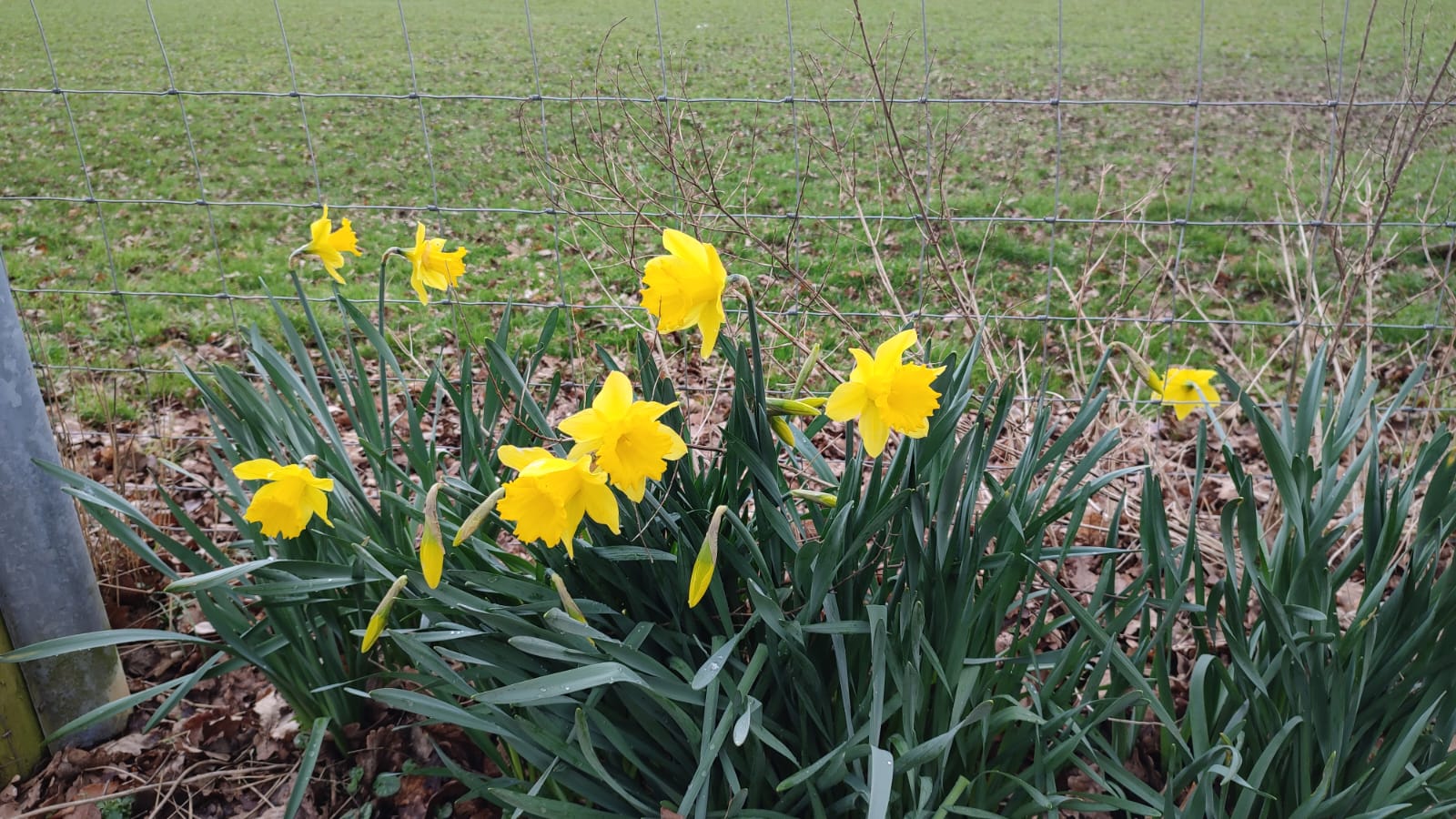
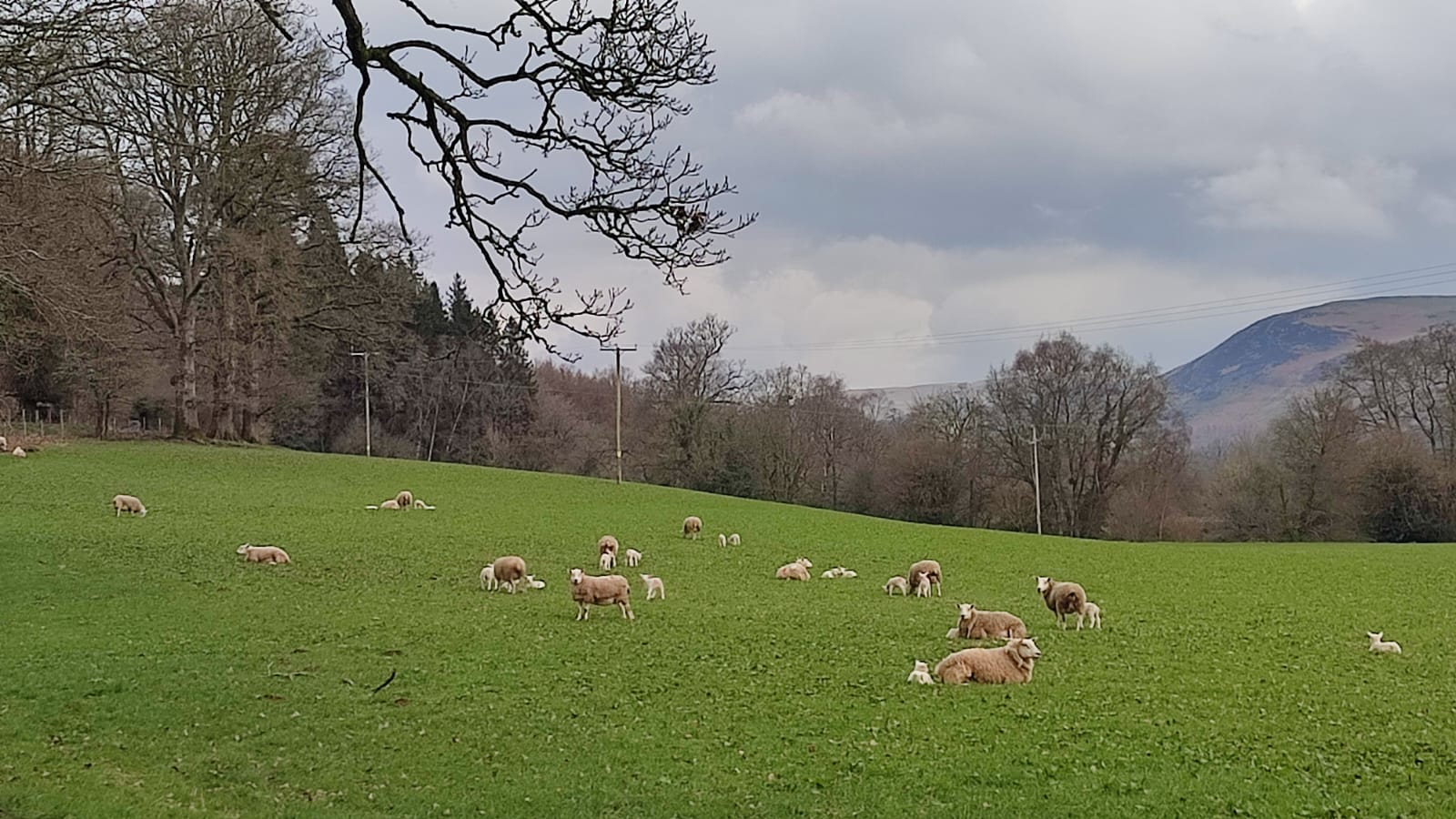
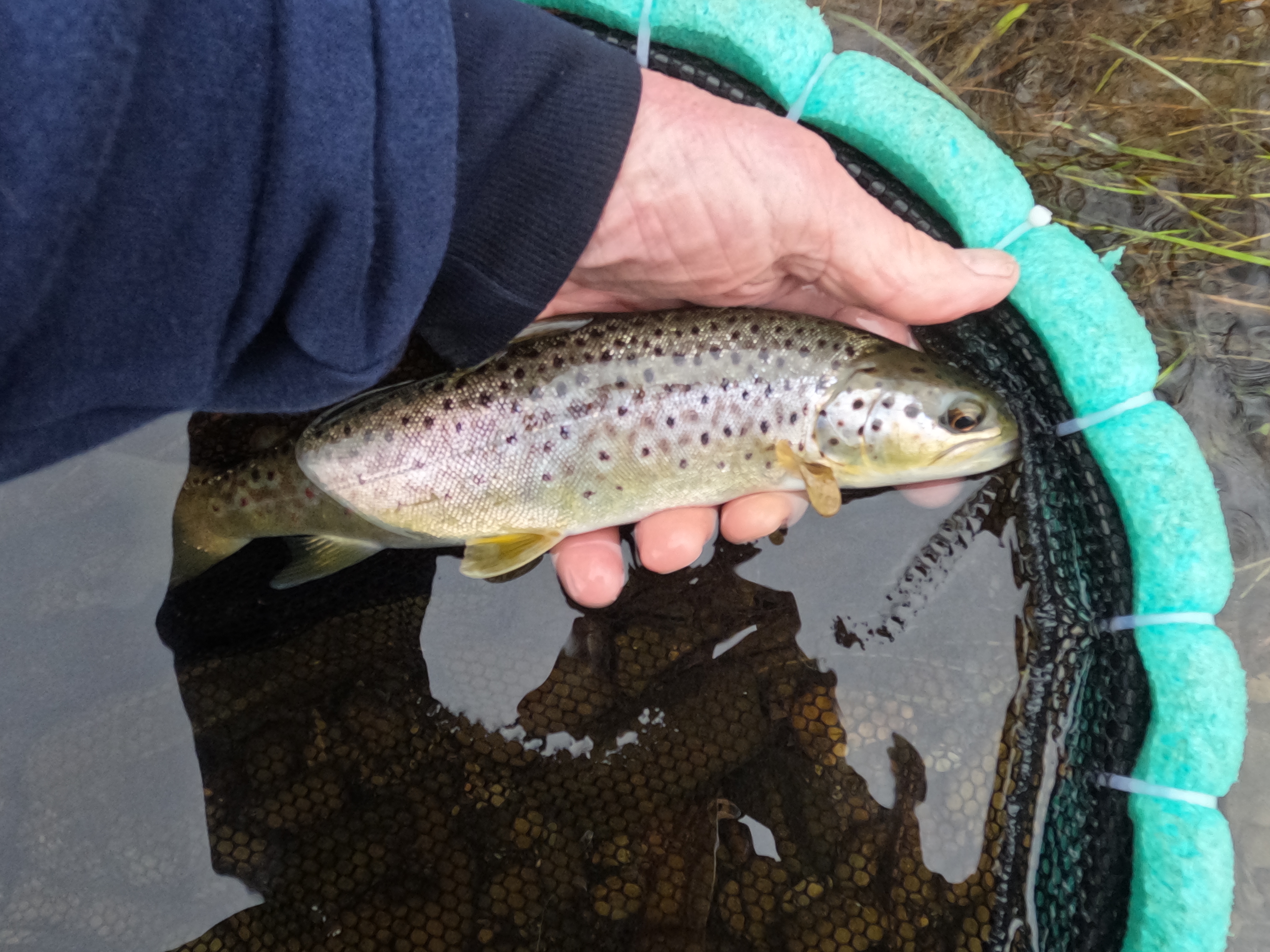
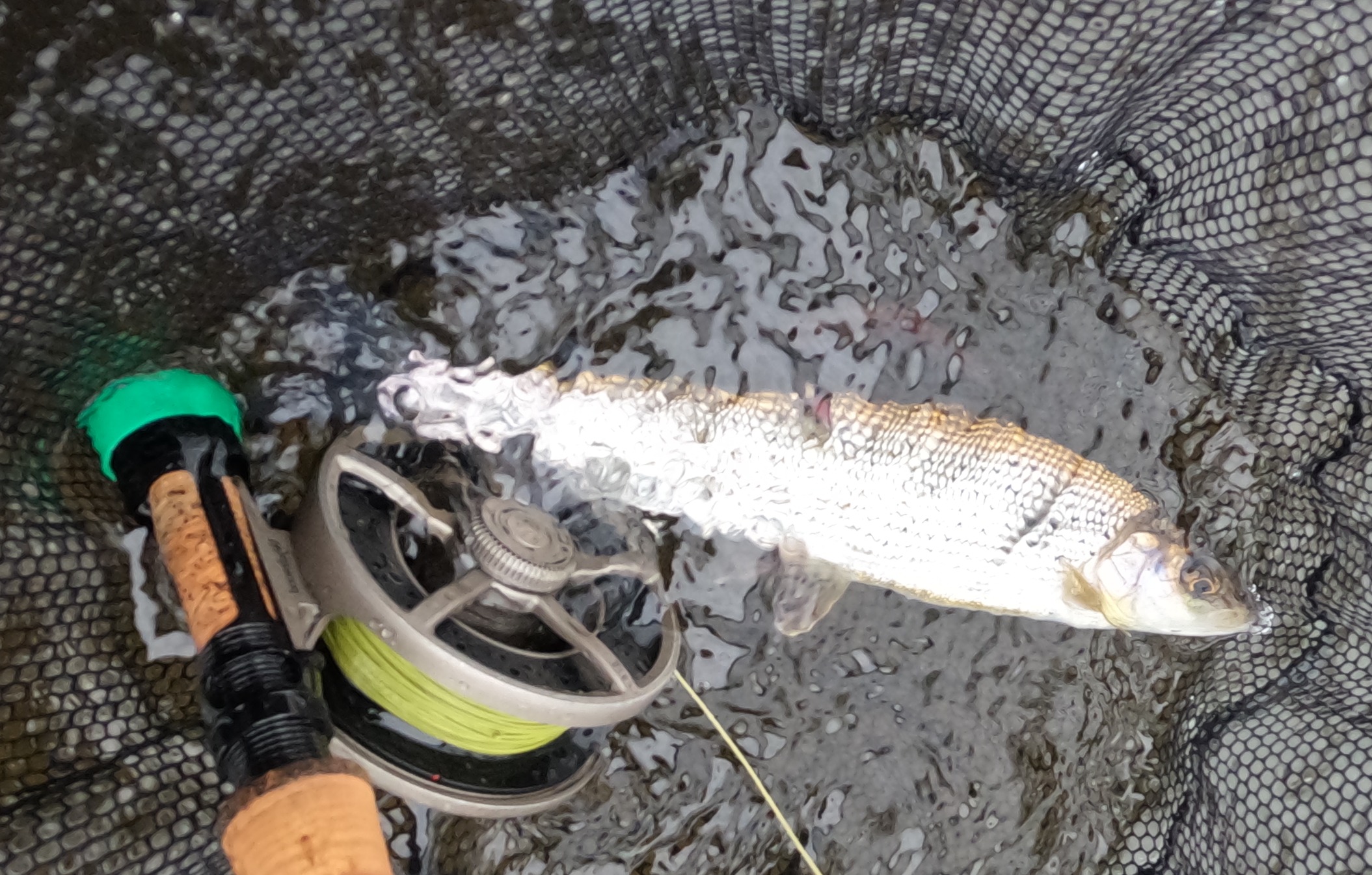


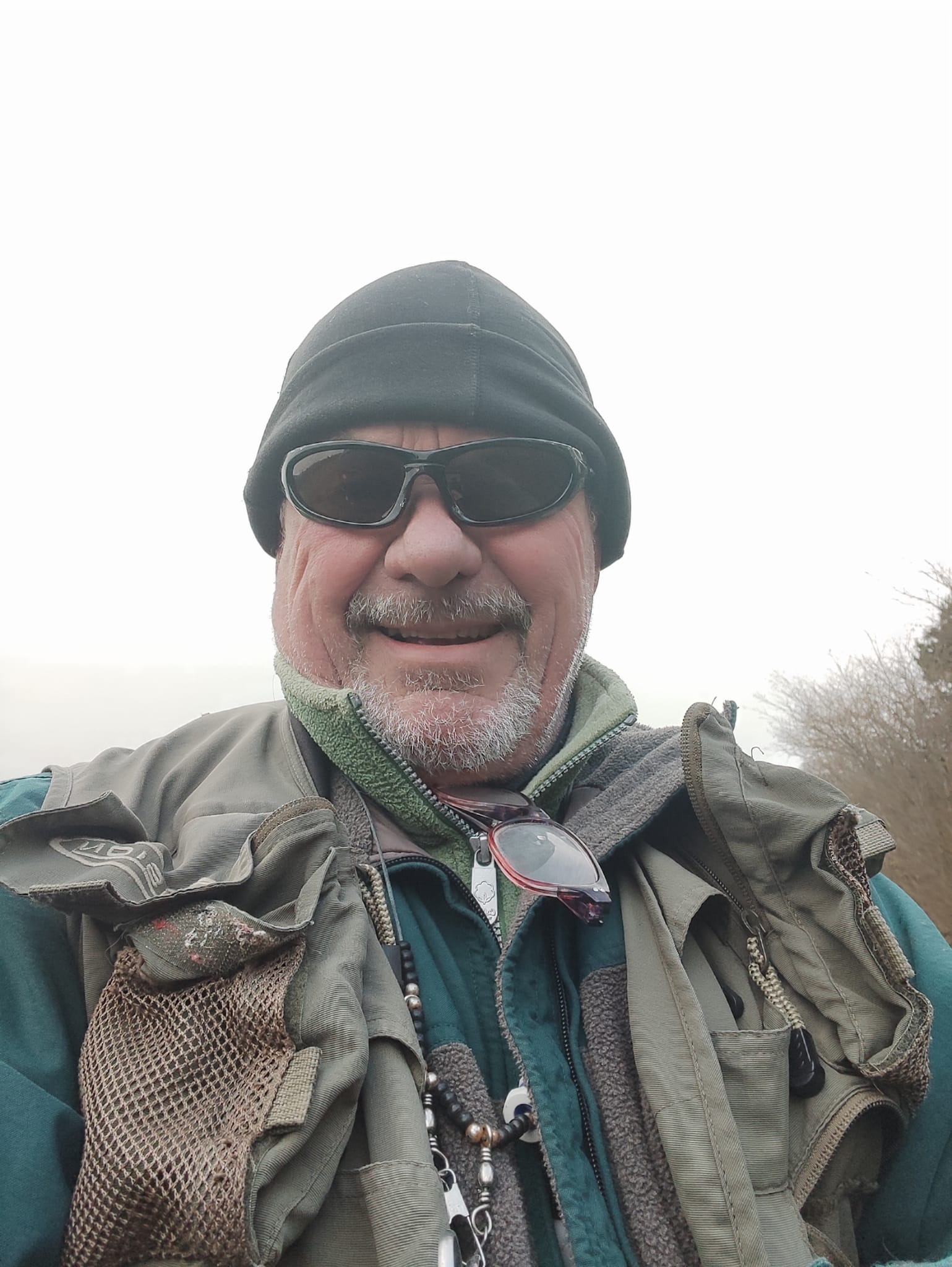
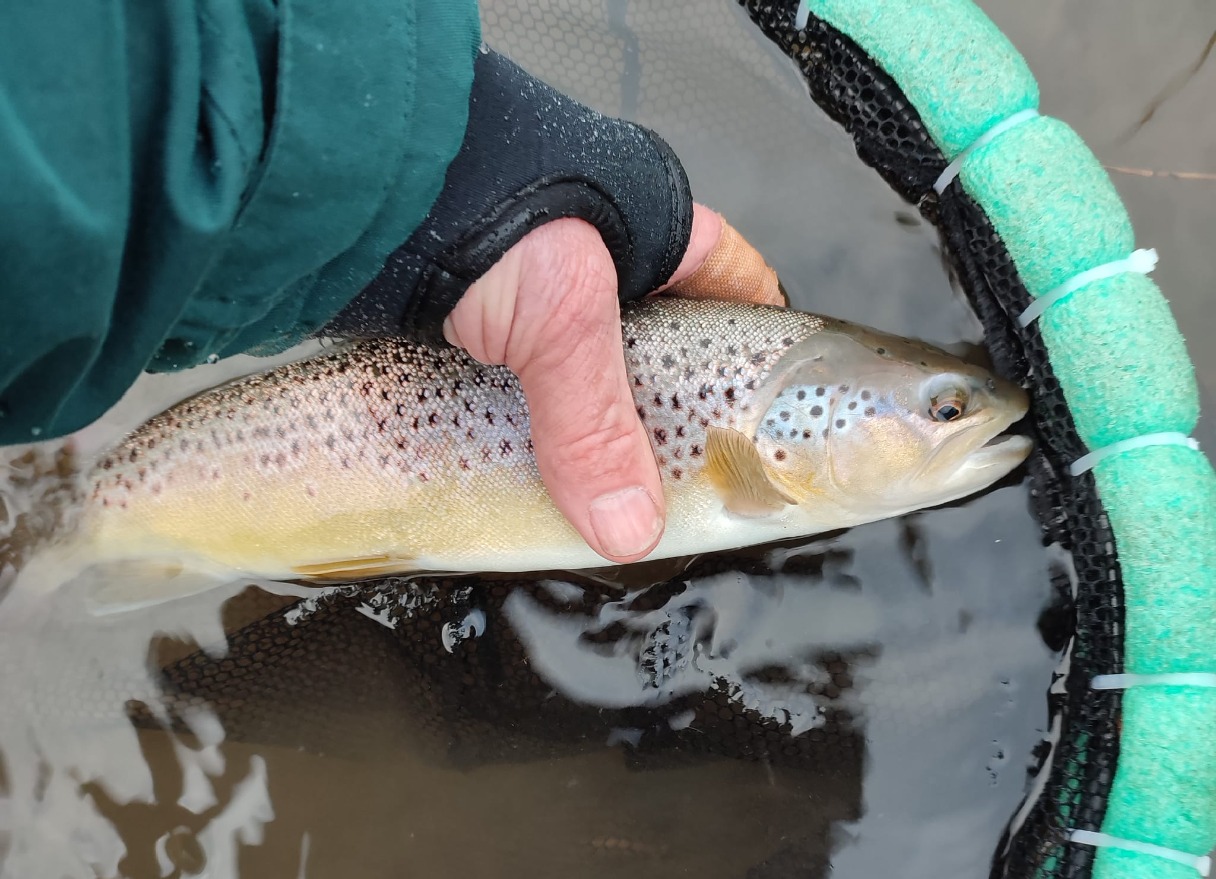
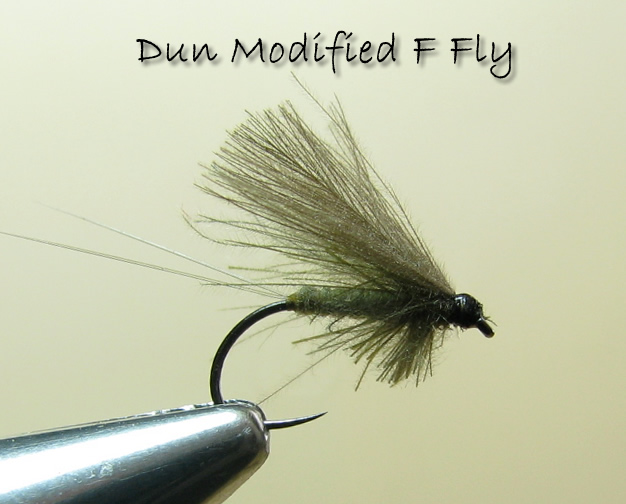
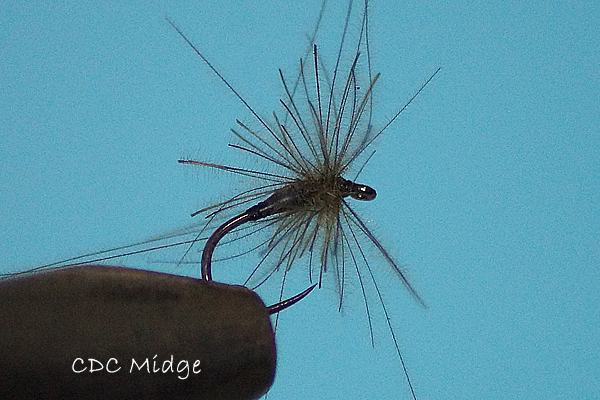
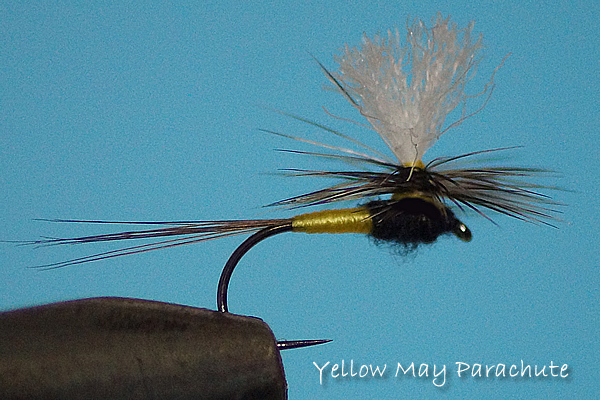
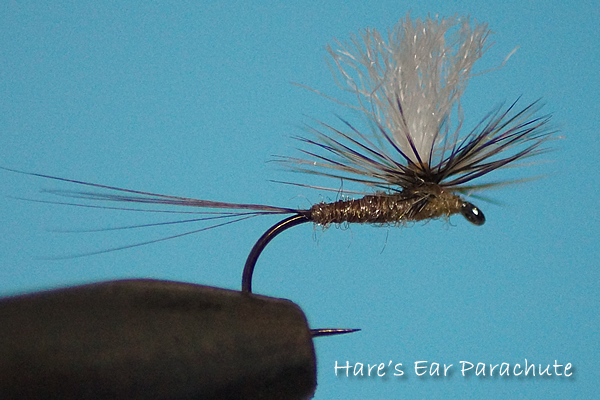
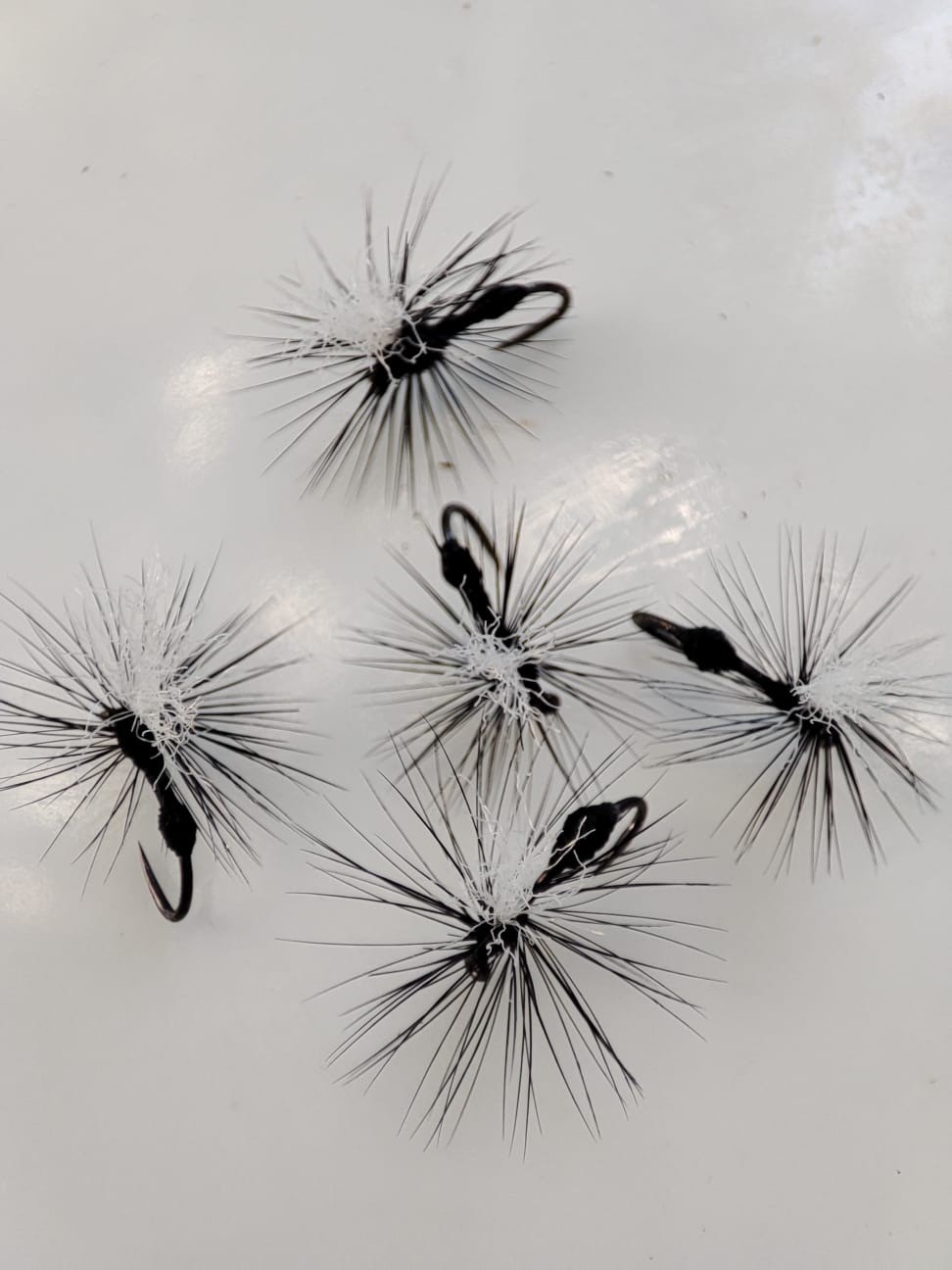
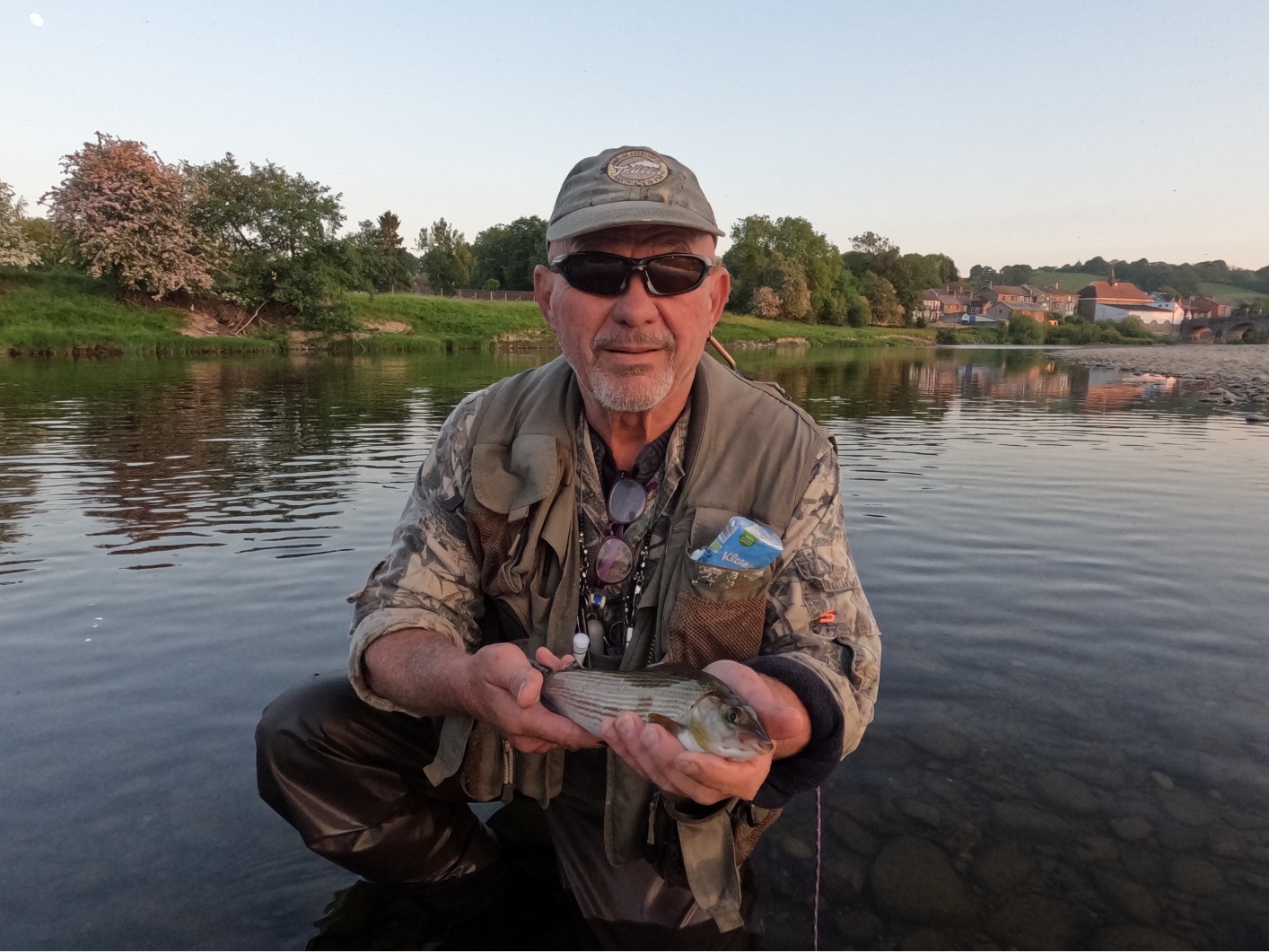







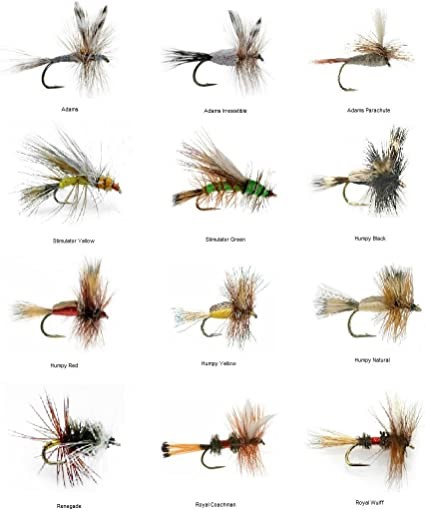


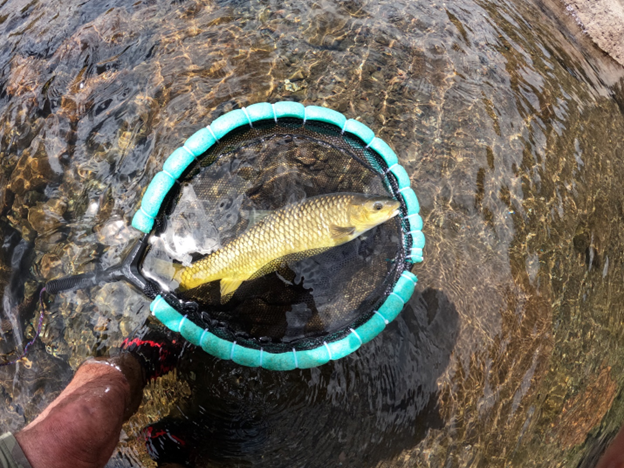




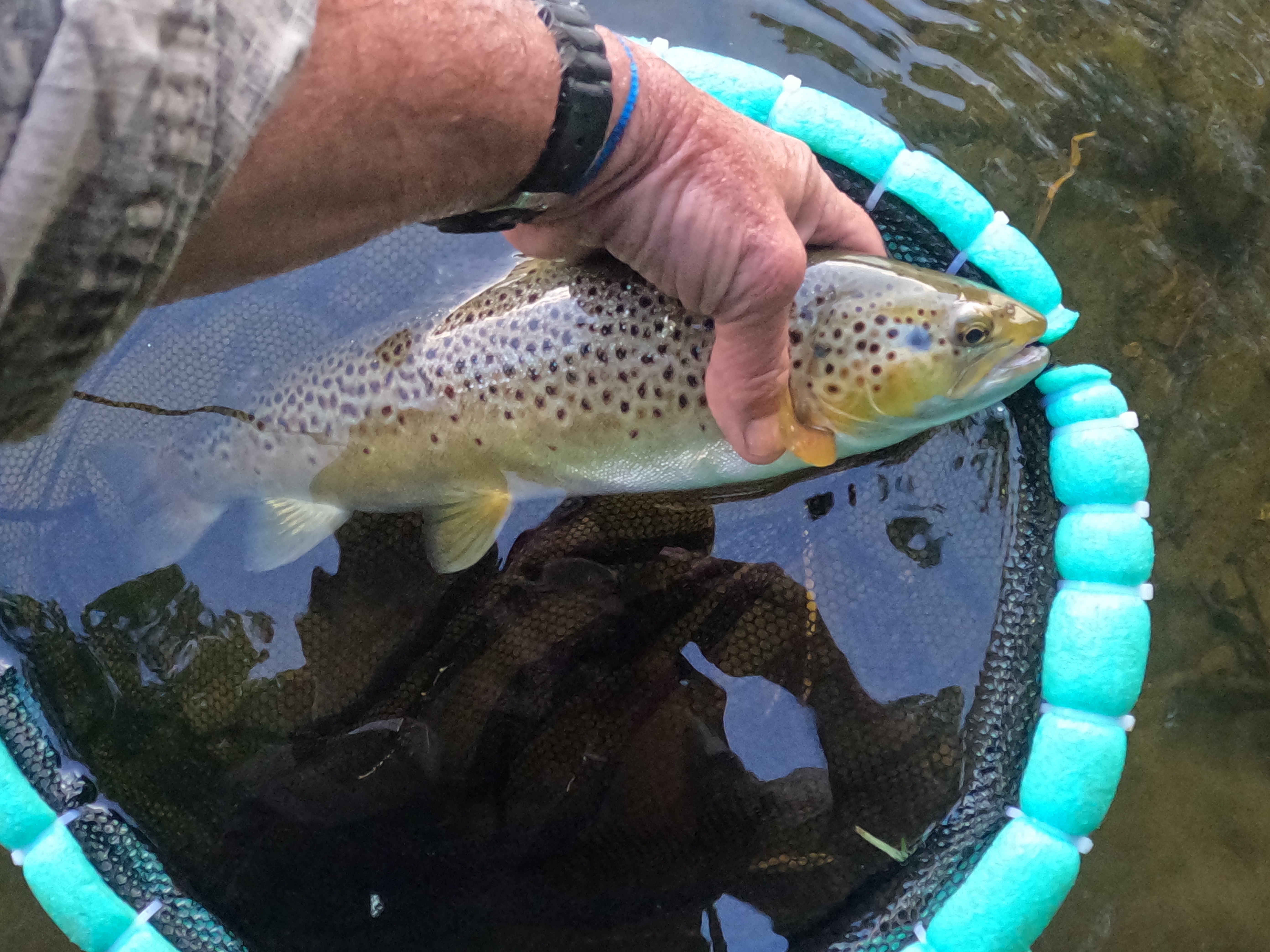

 The Fishing Gene